






In brief
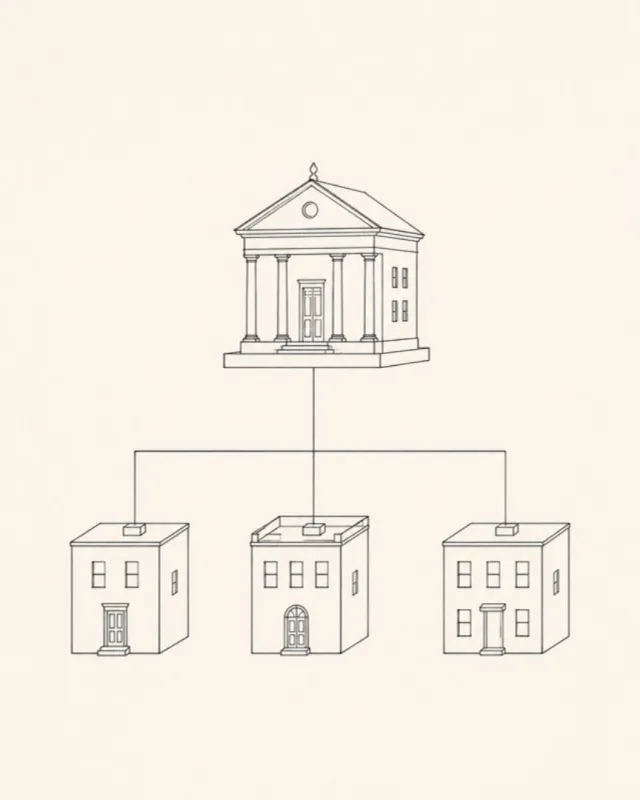
In Dubai, many projects are built within large communities in which a master developer holds the land and the infrastructure, and a sub-developer acquires a plot from it and builds a building on it. The Dubai Escrow law (Law 8/2007) defines a "developer" as including both, and requires the contract between them and plans approved also by the master developer to be attached to an application for off-plan sale. The Jointly Owned Property Law (Law 6/2019) provides that the master developer manages the community's common facilities, while responsibility for the building itself, the Escrow account and structural defects rests mainly on the developer who built it.
Key takeaways
- 1Under Article 2 of Law 8/2007, a "developer" includes both the master developer and the sub-developer, and both are subject to the registration and Escrow obligations when they sell off-plan.
- 2The application to open an Escrow account and to sell off-plan includes the contract between the master developer and the sub-developer and plans approved by the authorities and by the master developer (Article 6).
- 3The DLD may update the plot registration to reflect the sale agreement between the master developer and the sub-developer, and an off-plan buyer may request registration of his agreement with the sub-developer (Article 8).
- 4Under Law 6/2019, the master developer manages the community's common facilities through a RERA-approved management company, and the developer repairs structural defects for 10 years from the date of the completion certificate.
- 5The plot agreement with the master developer sets timetables, planning guidelines and approvals; a deviation from it can delay the entire project.
An Israeli developer examining a plot in Dubai will discover that in a large part of the market he is not buying "open" land, but a plot within a planned community managed by a master developer. This relationship determines who approves the plans, who builds the roads and facilities, who collects service charges, and who is responsible towards the buyers. This guide explains the division of responsibility under the law, and what should be checked in the agreement before committing to a plot.
What is the difference between a master developer and a sub-developer in Dubai?
A master developer is the developer of the entire community: it holds the large land area, plans it and develops the infrastructure and common facilities. A sub-developer acquires from it a plot, or a right in a plot, and builds its own project on it, for example a residential building, and sells the units to buyers. The Dubai Escrow law, Law 8/2007, defines a "developer" as including the master developer and the sub-developer, so each of them that sells units off-plan is subject to the obligations of the law.
In practice, the same entity can fill both roles: a master developer may itself build some of the buildings in the community and sell other plots to sub-developers. For an Israeli developer entering as a sub-developer, the central question is what it receives from the master developer, and what the master developer can demand of it.
What does Dubai law require of a sub-developer that wants to sell off-plan?
Before collecting money from buyers, the sub-developer must be registered in the DLD's Register of Real Estate Developers, hold a licence from the authorities, and open an Escrow account for the project. Under Article 6 of Law 8/2007, the application for off-plan sale includes eight documents:
- A certificate of membership of the Dubai Chamber of Commerce.
- A trade licence.
- The Title Deed of the land.
- The contract between the master developer and the sub-developer.
- Preliminary architectural and engineering plans approved by the competent authorities and by the master developer.
- An estimate of costs and revenues approved by a certified accountant.
- An undertaking to start construction, by the sub-developer, or by the master developer where there is no sub-developer.
- A standard sale contract.
The practical meaning: without a signed contract with the master developer and without its approval of the plans, off-plan sales cannot begin. Therefore the timetable for approvals from the master developer is part of the project timetable. On the registration itself see developer registration with RERA and a development licence, and on the Escrow obligations see a developer's Escrow account obligations.

How is the sub-developer's ownership of the plot registered?
Under Article 8 of Law 8/2007, the DLD may update the plot registration to reflect the sale agreement between the master developer and the sub-developer. Under the same article, an off-plan buyer may ask the DLD to register his agreement with the sub-developer. In other words, the register can reflect the chain of rights from the master developer, through the sub-developer, to the buyer.
Before signing, it is worth checking what stage the registration is at: whether the plot is already registered in the name of the sub-developer, whether only an agreement is registered, and which conditions still need to be met, for example payment of the balance of the price to the master developer. A sub-developer that has not yet completed payment to the master developer is in a weaker position vis-à-vis the financing bank and the buyers. On land checks see acquiring land for development in Dubai.
Who is responsible for what: a table of responsibilities
The table summarises the division of responsibility under the laws reviewed. Some issues are in practice determined in the agreement between the parties, so the last column indicates what to check in it.
| Issue | Master developer | Sub-developer | What to check in the agreement |
|---|---|---|---|
| Land and community infrastructure | Holds the overall land and develops the infrastructure | Acquires a plot or a right in a plot | Dates for completing infrastructure to the plot: connections, access, roads |
| Approval of plans | Approves the building's plans (Article 6, Law 8/2007) | Submits plans to the authorities and to the master developer | Planning guidelines, response times and what happens when there is no response |
| Registration and off-plan sale | When it sells units itself, the same obligations apply to it | Developer registration, licence and an Escrow account for the project | Who is responsible for each approval and by what date |
| Start of construction | Undertakes only where there is no sub-developer | Undertakes to start construction; striking off the register is possible if it has not started within 6 months of approval of the off-plan sale (Article 17) | Alignment between the timetable in the plot agreement and the statutory obligations |
| Community common facilities | Manages them through a RERA-approved management company (Article 19, Law 6/2019) | Subject to the community rules | Allocation of costs and community charges that will apply to the buyers |
| Common property in the building | Not directly | Submits a Building Management Statement for RERA approval before sale (Article 20, Law 6/2019) | Alignment between the building documents and the community documents |
| Structural defects | For what it built itself | Repairs structural defects for 10 years from the completion certificate, and defective installations for one year (Article 40, Law 6/2019) | Back-to-back with the contractor and the engineer |
Who manages the community and who collects service charges?
Under Article 19 of Law 6/2019, the master developer manages the community's common facilities through a management company approved by RERA. Within the building, Article 18 divides management into three categories: in major projects the developer manages and may appoint a RERA-approved management company; in hotel projects an approved hotel management company manages; and in other projects RERA selects the management company.
Under Article 25 and Article 27 of the same law, service charges may not be collected before RERA has approved the budget in advance and an auditor certified by it. The DLD also operates a Service Charge Index, an official service for checking the approved service charges by project and budget year. This matters to a sub-developer because its buyers will ask what it will cost them to hold the apartment, and the answer also depends on the master developer's decisions.
Under Article 20 of Law 6/2019, the developer submits a Building Management Statement for RERA approval before sale, and the building bylaws within 60 days of the completion certificate. When a sub-developer builds within a community, the building's documents must be consistent with the master developer's community rules; otherwise the buyers receive two contradictory sets of rules.
Who is responsible for defects in a building built in a master developer's community?
Responsibility for the building itself rests with whoever built it. Under Article 40 of Law 6/2019, the developer repairs structural defects in the common property for 10 years from the date of the completion certificate, and repairs or replaces defective installations, such as electrical, plumbing and sewage systems, for one year. In addition, under the new federal Civil Code (Federal Decree-Law 25/2025, in force from 1.6.2026), the main contractor and the engineer are jointly and severally liable for 10 years from handover for collapse and for defects that endanger stability or safety, and a term exempting them from this liability is void.
For an Israeli sub-developer, the meaning is twofold: it is exposed towards the buyers to liability under Law 6/2019, so it needs construction and design agreements that transfer the risk back-to-back to the contractor and the engineer, with guarantees and periods that match the statutory periods.
What is important to check in the plot agreement with the master developer?
The plot agreement is the document that determines most of the sub-developer's risks. The most important issues to check:
- The right acquired: Freehold, Leasehold or another right, and when it is registered in the name of the sub-developer.
- Payment terms: the payment schedule to the master developer and its connection to registration of the rights and a charge in favour of the financing bank.
- Planning guidelines: building areas, height, permitted uses, and what happens when the authorities require a change.
- Milestones: dates for submitting plans, starting construction and completion, and the sanctions for delay, including a right of the master developer to cancel or take back the plot.
- Infrastructure: the master developer's undertaking for connections and access by a certain date, and the remedy if it is late.
- Transfer and change of control: whether the master developer's consent is needed to transfer the plot or the shares of the project company, and at what cost.
- NOC approvals: which approvals the master developer issues throughout the project and to buyers, and at what cost.
- Community charges: how they are set, and what the buyers' share is.
- Dispute resolution: a dispute over property on the Dubai Mainland is heard in the Dubai courts, not at the DIFC, even if otherwise agreed. See DIFC Courts versus the local courts.
If the project is carried out with a local partner, the agreement with the master developer must also be consistent with the partnership agreement. On this, see a local partner for a project in Dubai and a JV agreement for an Israeli developer in Dubai.
Can a foreign developer buy a plot anywhere in Dubai?
No. Under Article 4 of Law 7/2006 concerning real property registration in Dubai, foreigners may obtain a Freehold right, or Usufruct and Leasehold for a period of up to 99 years, only in areas designated for this purpose. A company with any foreign shareholder is restricted to those areas, even if it is incorporated in the UAE. According to Afridi & Angell, a foreigner can obtain a Leasehold outside the designated areas as well, but not a Freehold. In practice, a considerable part of the plots available to a foreign developer are located within master developer communities, so the relationship with it is usually an integral part of the transaction.
Hence also the economic question: a plot in a community comes with infrastructure, branding and an approvals framework, but also with dependence on the master developer's decisions, its planning guidelines and its timetables. A plot outside a community may give more freedom, but requires a more thorough check of the type of right, the infrastructure and the approvals. This comparison is made before entering into negotiations on price.
Before you sign: how we assist
Before committing to a plot in a master developer's community, we review the plot agreement, the registration of rights with the DLD and the alignment between the milestones in the agreement and the developer's obligations under the Escrow law. In Dubai we work in coordination with licensed local lawyers, and we coordinate for the Israeli developer the legal review, the structure and the Israeli side of the transaction.
This guide reflects the legal position as of November 2026 and does not constitute legal advice for any specific case. Master developer terms vary from community to community, and every agreement is examined on its merits with a licensed local lawyer in Dubai.
Frequently asked questions
What is a master developer in Dubai?
The developer of a planned community: it holds the overall land, plans it and develops the infrastructure and common facilities, and sometimes sells plots to sub-developers who build on them. Under Law 6/2019 it manages the community's common facilities through a RERA-approved management company.
Does a sub-developer need the master developer's approval to build?
Yes, for the purposes of off-plan sale. Under Article 6 of Law 8/2007, the application to open an Escrow account and to sell off-plan includes plans approved by the authorities and by the master developer, and also the contract between the two.
Is the master developer responsible for defects in a sub-developer's building?
As a rule, responsibility for the building rests with the developer who built it. Under Article 40 of Law 6/2019, the developer repairs structural defects for 10 years from the completion certificate and defective installations for one year. The main contractor and the engineer are liable under the Civil Code for 10 years for defects that endanger stability or safety.
Must a sub-developer have a separate Escrow account?
Yes, when it sells off-plan. Under Law 8/2007, a separate Escrow account is opened for each project, the funds are used only for the construction of that project, and the developer's creditors cannot attach them.
Who sets the service charges in the community?
The community's common facilities are managed by the master developer. Under Law 6/2019, service charges may not be collected before RERA has approved the budget in advance, and the DLD publishes the approved service charges in the Service Charge Index.
What happens if a sub-developer does not start construction on time?
There are two layers of risk. Under Article 17 of Law 8/2007, a developer may be struck off the register if it has not started construction within 6 months of approval of the off-plan sale without justification. In addition, the plot agreement with the master developer usually sets its own milestones and sanctions.
Is a sub-developer's buyer registered with the DLD?
Yes. Under Article 8 of Law 8/2007, an off-plan buyer may request registration of his agreement with the sub-developer, and off-plan sales are registered in the interim register under Law 13/2008 (Oqood).
 Read next · 11 min readBuying Land in Dubai for Development: Where a Foreigner May Buy, Freehold vs Musataha, Checks Before Signing and the Acquisition Stages for an Israeli DeveloperBuying land in Dubai as an Israeli developer: Freehold areas, Musataha and 99-year leases, master developer approval, land checks and the 4% DLD fee.Read the guide
Sources
- Dubai Law No. 7 of 2006 Concerning Real Property Registration (DLP)
- Dubai Law No. 8 of 2007 Concerning Escrow Accounts for Real Estate Development (DLP)
- Afridi & Angell - Purchasing and Selling Commercial Real Estate, Emirate of Dubai (April 2026)
- Dubai Law No. 6 of 2019 on the Ownership of Jointly Owned Real Property (Afridi & Angell)
- DLD - Service Charge Index
- Charles Russell Speechlys - Decennial liability under the new UAE Civil Code, Articles 821-824 (18.5.2026)
- LexisMiddleEast - Federal Decree-Law No. 25 of 2025 (Civil Transactions Law)
- DIFC Courts - Hackett v Hania [2017] DIFC SCT 034
