






In brief
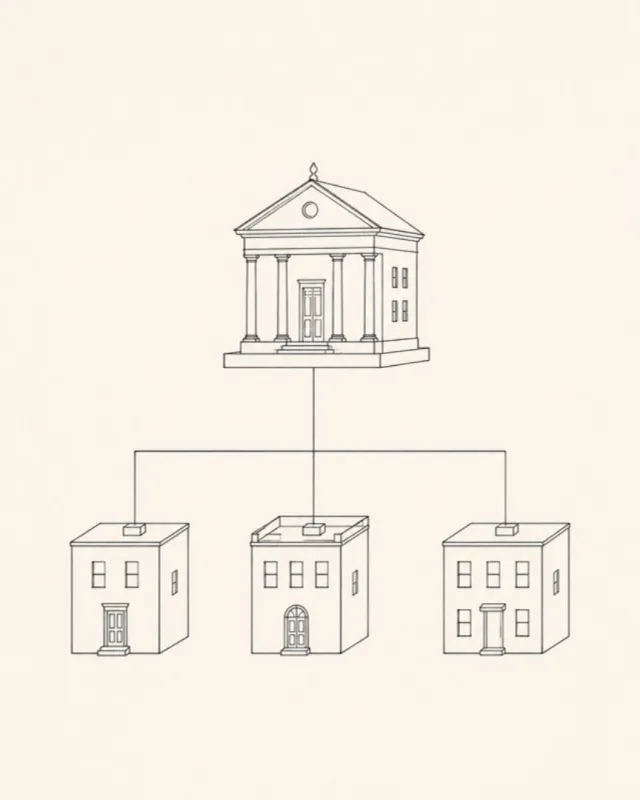
In Dubai, every project sold Off-plan holds a separate Escrow account in the project's name, with an Escrow agent approved by the Dubai Land Department (DLD). Buyers' money, as well as a loan the developer takes against a mortgage over the project, goes into the account and is used only to build that project, and the developer's creditors cannot attach it. After the completion certificate, 5% of the account remains with the Escrow agent and is released to the developer one year after the units have been registered in the buyers' names (Article 14 of Law 8/2007).
Key takeaways
- 1A separate account for each project, in the project's name. The funds are used only to build it, and the developer's creditors cannot attach them (Article 9 of Law 8/2007).
- 2Bank finance against a mortgage over the project is also deposited in the Escrow account (Article 13).
- 3A broker deposits the buyer's money directly into the Escrow account, without first deducting a commission (Article 12 of Resolution 6/2010).
- 45% of the account is retained after the completion certificate and released one year after the units are registered in the buyers' names (Article 14).
- 5A cancelled project: RERA appoints an auditor at the developer's expense and orders refunds. If the account is insufficient, the developer refunds within 60 days (Articles 25-26 of Resolution 6/2010).
An Israeli developer familiar with closed bank financing ("livui banka'i") and the Israeli Sale (Apartments) (Assurance of Investments) Law will recognise a familiar principle in Dubai: buyers' money does not go into the developer's coffers. But the mechanism is different. Instead of statutory sale-law guarantees for each buyer, Dubai built a system of a dedicated Escrow account for each project, supervised by the Dubai Land Department (DLD) and RERA. This guide is written from the developer's perspective: what your obligations are, how cash flow and financing are planned within the restrictions, and what the risks are when something goes wrong. The buyer's side is described in the guide to the Escrow law from the buyer's perspective.
What is a project Escrow account in Dubai and who holds it?
It is a bank account in the project's name into which the payments of Off-plan unit buyers and of financiers are made. Under Article 2 of Law 8/2007, the Escrow Agent is a bank or financial institution approved by DLD, and DLD maintains a register of Escrow agents (Article 10). The account is opened under a written agreement between the developer and the agent that sets the terms of its management, and a copy is delivered to DLD (Article 7).
What must be submitted to open an Escrow account?
Eight documents, under Article 6 of the law: a Chamber of Commerce membership certificate, a commercial licence, a land registry extract for the land, the master developer and sub-developer contract if any, approved designs and engineering plans, a cost and revenue report approved by an auditor, an undertaking to start construction and a standard sale contract. The cost and revenue report is the heart of the matter: it is the basis on which the regulator and the agent will review the project's progress and the drawdowns. On registering the company as a developer, see developer registration with RERA.
Which funds must go into the Escrow account?
- All Off-plan buyer payments: down payments and instalments under the payment schedule, directly into the project account.
- Funds collected by a broker: the broker deposits the sale price into the Escrow account, not into its own account, and may not first deduct its commission. An agreement providing otherwise is void (Article 12 of Resolution 6/2010).
- Bank finance: when the developer mortgages the project to obtain finance, the lender deposits the loan into the project's Escrow account (Article 13 of Law 8/2007).
- One project, one account: several projects require several separate accounts, and they may not be commingled (Article 9).
There is no "transfer between projects" and no use of buyers' money to buy the next plot or to cover the group's general overheads. Therefore equity, the cost of the land and the costs of the period before sales begin must be financed outside the account. On structuring the finance, see real estate project finance in Dubai for a foreign developer.
How does the developer draw money from the Escrow account?
Drawdowns are tied to construction progress. The law itself provides that the funds are used only to build the project (Article 9), but does not set out a drawdown schedule. According to reviews by local law firms, the developer submits a request to the Escrow agent with confirmation from the project's engineering consultant that an agreed construction stage has been reached, and the agent pays the contractors and consultants after checking. Resolution 6/2010 provides that the completion percentage is determined according to a technical report by a RERA-approved consultant (Article 17), so the consultant's progress reports carry decisive weight.
- Completion of a construction stage according to the submitted plan.
- A progress report by the engineering consultant confirming the stage and the completion percentage.
- A drawdown request to the Escrow agent with the relevant invoices.
- Review by the agent, and where necessary review by the regulator.
- Payment from the account to the contractor, the consultants or the developer in accordance with the Escrow agreement.
The law is strict with anyone who falsifies progress: Article 16 imposes imprisonment and/or a fine of at least AED 100,000 for misuse of project funds, and also on an auditor or consultant who knowingly approves false reports.
What is the ongoing supervision of the account?
The Escrow agent regularly submits income and expenditure reports and any information DLD requests, and DLD may use external auditors. When a breach is discovered, DLD notifies the agent in writing and sets a deadline for remedying it (Article 11). Depositors and their representatives may inspect their accounting records and obtain copies (Article 12). Since September 2026, DLD's Initial Registration platform gives the developer a consolidated view of the project's Escrow accounts and financial data, with early alerts.
What happens to the 5% at the end of the project?
After the developer receives a Completion certificate, the Escrow agent retains 5% of the total value of the account, and releases it to the developer one year after the units have been registered in the buyers' names (Article 14 of Law 8/2007). The cash-flow implication: part of the profit is deferred for at least a year after registration, so it is worth planning for it already in the business plan and in the agreement between the partners.
What happens to the funds when the project stalls or is cancelled?
| Situation | What happens | Basis |
|---|---|---|
| The project is stuck or not completed | The Escrow agent consults DLD and takes steps to protect depositors: completion or refund | Article 15, Law 8/2007 |
| The developer did not start construction within 6 months of sale approval | Possible removal from the developers' register | Article 17, Law 8/2007 |
| RERA cancelled the project | A technical report, appointment of an auditor at the developer's expense, and an order for refunds within 14 days | Article 25, Resolution 6/2010 |
| The Escrow account is insufficient for the refund | The developer refunds the difference within 60 days, unless RERA has extended the period | Article 26, Resolution 6/2010 |
| Construction did not begin for reasons beyond the developer's control | Full refund of the funds to the buyers | Article 11 of Law 13/2008 as amended by Law 19/2020 |
A point not to miss: under the old wording of the law, a developer could retain up to 30% where construction had not begun. Law 19/2020 abolished this option, and today 100% must be refunded. Anyone reading Articles 15-16 of Resolution 6/2010, which still mention 30%, should remember that the amending law prevails. RERA's grounds for cancellation include, among others, failure to start construction despite the approvals, lack of a genuine intention to build, gross negligence and bankruptcy (Article 23 of the Resolution). Disputes over cancelled or unfinished projects are heard by a special judicial body established under Decree 33/2020.
What happens when a buyer stops paying?
Here the law also protects the developer, but along a defined route. Under Article 11 of Law 13/2008 as worded by Law 19/2020, the developer reports to DLD, and DLD sends the buyer a 30-day notice. If not remedied, the developer's options depend on the completion percentage: above 80% it can keep the contract and claim the balance, request a public auction, or cancel and retain up to 40% of the unit value; between 60% and 80%, cancel and retain up to 40%; and below 60%, where works have begun, cancel and retain up to 25%. The balance is refunded to the buyer within one year of cancellation or within 60 days of resale, whichever is earlier.
What mistakes do foreign developers make with the Escrow account?
- Building a cash flow that assumes the use of buyers' money to buy land or to repay a shareholder loan.
- Not agreeing in advance with the financing bank that the loan will be deposited in the Escrow account.
- Signing with a broker who takes a commission out of the buyer's money before the deposit.
- Not budgeting for the 5% that remains for a year after registration.
- Not settling in the partners' agreement who finances cost overruns, when there is no free access to the account. See JV agreement structure.
Before you sign: how we assist an Israeli developer
We work with Israeli developers in coordination with licensed local lawyers in Dubai: we review the Escrow agreement with the bank, build together with the financial advisers a cash-flow model that fits the account's restrictions, and set out in the partners' agreement and the finance agreement what the law does not regulate. The goal is for every drawdown to be predictable in advance, not a surprise in the middle of construction.
This guide is general information as of November 2026 and is not legal advice. Escrow procedures in Dubai are updated, and every project is examined on its merits with a licensed local lawyer and with the Escrow agent.
Frequently asked questions
Can a developer in Dubai use buyers' money for another project?
No. Under Article 9 of Law 8/2007, each project has a separate Escrow account, and the funds are used only to build that project. Misuse of project funds is an offence punishable by imprisonment and/or a fine of at least AED 100,000.
Can the developer's creditors attach the Escrow account?
No. Article 9 of the law provides that the developer's creditors may not attach the funds deposited in the project's Escrow account.
Does a bank loan for the project go into the Escrow account?
Yes. Under Article 13 of Law 8/2007, when the developer mortgages the project to obtain finance, the lender deposits the loan into the project's Escrow account.
When does the developer receive the 5% that remains in the account?
One year after the units have been registered in the buyers' names. The Escrow agent retains 5% of the total value of the account from the time of the completion certificate (Article 14).
How is the project's completion percentage determined?
According to a technical report by a RERA-approved consultant (Article 17 of Resolution 6/2010). The completion percentage affects drawdowns and the developer's rights when a buyer defaults.
What happens if the project was cancelled and the Escrow account is insufficient for refunds?
Under Article 26 of Resolution 6/2010, the developer must refund the difference to the buyers within 60 days, unless RERA has extended the deadline. If it does not refund, RERA acts to protect the buyers, including referral to the judicial authorities.
May a broker take its commission out of the buyer's down payment?
No. Under Article 12 of Resolution 6/2010, the broker deposits the sale price into the Escrow account and may not first deduct its commission. An agreement providing otherwise is void.
 Read next · 9 min readUBO in Dubai: Ultimate Beneficial Owner Registration and Substance Obligations for an Israeli-Owned Emirati CompanyUBO registration in Dubai for an Israeli-owned company: who counts under Resolution 109/2023, deadlines, penalties, what remains of ESR and substance.Read the guide
Sources
- Dubai Legal Portal - Law No. 8 of 2007 Concerning Escrow Accounts for Real Estate Development
- Dubai Legal Portal - Executive Council Resolution No. 6 of 2010
- Dubai Legal Portal - Law No. 19 of 2020 Amending Law No. 13 of 2008
- Dubai Land Department - Initial Registration platform (3.9.2026)
- BSA - Navigating Dubai's off-plan real estate laws: compliance essentials for developers
