






In brief
A BuyBack undertaking in Dubai is a contractual promise by a particular entity to buy the apartment from you at a price set in advance, and it is worth exactly as much as the signature, the security and the conditions behind it. The escrow account under Dubai Law 8/2007 is intended for building the project and does not guarantee payment of the buy-back. Before signing, check who is undertaking, on what amount the premium is calculated, under what conditions and in what window it can be exercised, who pays the transfer fees, and where to sue if the payment does not arrive.
Key takeaways
- 1A BuyBack is usually a right of the buyer to require the undertaking party to buy the unit (a put option), not an obligation of the buyer to sell. Check exactly what is written.
- 2The value of the undertaking depends on who the undertaking party is: the project company, the parent company or the marketer. Each has a different ability to pay.
- 3Law 8/2007 earmarks escrow funds for building the project only (article 9). The developer pays for the buy-back out of other money, unless there is a separate guarantee or security.
- 4"X% on the capital paid" is very different from "X% on the price". Calculate before signing, including DLD fees that are not always refunded.
- 5According to Israel Securities Authority staff position 103-45 (20.2.2022), an undertaking to buy back at a fixed price is one of the signs that a transaction is in substance a security.
What is a BuyBack in an Off-plan transaction in Dubai?
A BuyBack is a clause or an ancillary agreement in which a particular entity undertakes to buy the unit from the purchaser at a price set in advance, usually after a defined period. In the version marketed today to Israeli buyers, the price is usually defined as "the purchase price plus a certain percentage on the capital paid", and the purchaser can request exercise within a fixed time window.
It is important to distinguish between two structures. In most cases this is a put option of the buyer: you are entitled to require the undertaking party to buy, but you are not obliged to. In another, rarer structure, there is a mutual obligation or a right of the developer to buy from you. The difference is decisive: with a buyer's option, the risk is that the undertaking party will not pay; with a developer's right, the risk is that you will lose the increase in value if the market has risen. The general explanation of return promises in such transactions is in I was promised a guaranteed return in Dubai and in guaranteed returns in real estate abroad; here we focus on the buy-back mechanism itself.
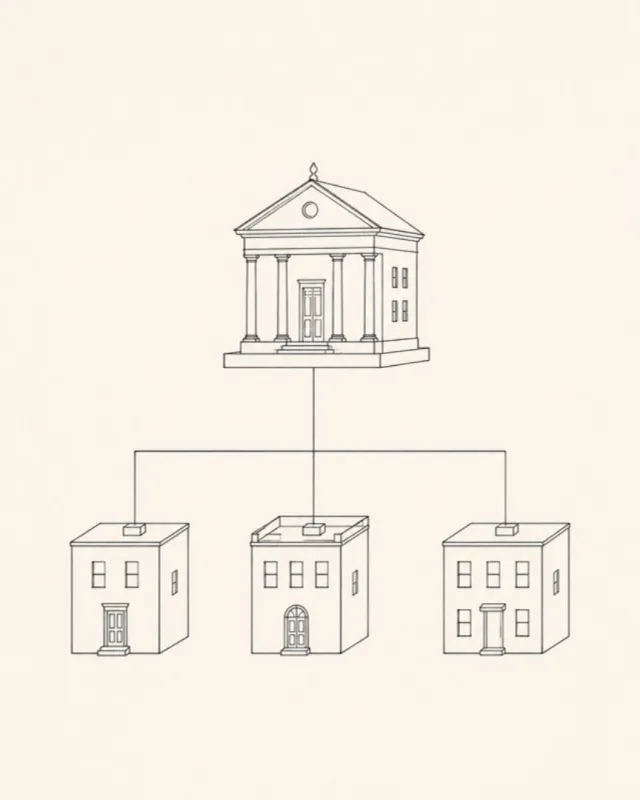
Who exactly undertakes to buy the apartment back?
The short answer: whoever has signed the undertaking, and only that party. "The developer" in a conversation with the marketer can be several different entities, and each of them is worth something different on the day payment is due.
| Who has signed | What it means | What to check |
|---|---|---|
| The project company (SPV) registered as developer with the DLD | The entity selling you the unit. Sometimes a special-purpose company for a single project | What assets it will have after the project has been handed over and sold |
| The parent company or the developer's group | A stronger signature, if it has actually signed | The exact name of the entity, the registration number, and whether it is a party to the contract or only appears in the logo |
| A related company or a management company | An entity separate from the developer, sometimes without significant assets | What its connection to the developer is and who stands behind it |
| The marketer or an Israeli company | An undertaking by someone who is neither the owner of the property nor the developer | Whether it has the ability to pay such an amount, and in which country you would sue it |
Under article 4 of Dubai Law 8/2007, a developer selling Off-plan must be registered in the DLD's register of developers. Make sure that the entity that has signed the SPA is the registered developer, and that the entity that has signed the BuyBack is the same entity or an entity expressly bound jointly with it.
Does the escrow account guarantee payment of the BuyBack?
No. Under article 9 of Law 8/2007, the funds in the project's escrow account are used to build that project only, and the developer's creditors cannot attach them. This protection is intended for your money during construction, not for a payment the developer will need to make in the future to buy the unit back. When the exercise date arrives, the developer pays out of its general resources, and by that date the project may already be complete and the money released.
So ask what does secure the payment: a bank guarantee in favour of the purchaser, a parent company guarantee, a set-off against the outstanding instalments, a charge, or nothing. An undertaking without security is not necessarily invalid, but it must be priced as an unsecured undertaking of a particular entity.
"Return on the capital paid" or on the price: how do you calculate it?
The difference between the wordings can be twofold or more. The following example is entirely hypothetical, in round numbers, and is intended only to illustrate the questions to ask:
| Hypothetical figure | "20% on the price" | "20% on the capital paid" |
|---|---|---|
| Price of the unit | AED 1,000,000 | AED 1,000,000 |
| Paid up to exercise | AED 400,000 | AED 400,000 |
| The guaranteed premium | AED 200,000 | AED 80,000 |
| Registration fee paid on purchase (4%) and not refunded | AED 40,000 | AED 40,000 |
| Profit before tax in Israel | AED 160,000 | AED 40,000 |
In the example, "20%" on the capital is in practice worth 10% on the capital after a single fee, and that is for the whole period, not per year. Hence the questions: does "the capital paid" include DLD fees and registration charges, or only payments to the developer? Is the premium calculated per year or for the whole period? Are the fees you will pay on the transfer back set off against the amount? And what happens if you paid more than required under the payment schedule?
When and how do you exercise the BuyBack?
This is the part where most of the traps are found. An option that can only be exercised in a window of a few weeks, by notice in a particular format and under conditions that are hard to meet, is worth much less than it appears in the presentation. The steps worth going through in the wording:
- The exercise window: when it opens, how long it stays open, and what happens if you did not give notice in time. Does the right lapse?
- Notice of exercise: to whom it is sent, by what method, and in what language. An address for service of notices that was changed without your knowledge can defeat the right.
- Conditions precedent: that all payments were made on time, that the right was not assigned to another, that the unit was not let or charged, that no claim was filed against the developer. Every such condition is a way to refuse.
- Payment date after exercise: within how many days the developer pays, and what the interest or compensation for delay is.
- Condition of the unit on transfer: vacant, free of charges, with service charges paid. Who confirms that the conditions have been met?
- Change of circumstances: what happens to the right if the project is delayed, if the developer changes ownership, or if you sell the unit before exercise.
Pay particular attention to the link between the BuyBack and the payment schedule. Your obligation to pay under the SPA stands on its own. Under article 11 of Dubai Law 13/2008, as worded by Law 19/2020, when a purchaser is in breach, the developer may, at the end of a procedure before the DLD, terminate and retain up to 25% of the unit's value when completion is below 60%, or up to 40% when completion is between 60% and 80%. A purchaser who stopped paying may lose both the BuyBack right and a significant part of what was paid.
What happens with registration and fees when the developer buys back?
A buy-back is a transfer of rights in every respect, and it must be registered. Under article 3(1) of Law 13/2008, a disposition transferring a right in an Off-plan unit is void if it was not registered in the interim register (Oqood). After handover, the transfer is registered in the permanent register. So check that the contract states who files the transfer, when, and what happens if the money was transferred and the registration was not completed, or the other way round.
The DLD transfer fee is 4% of the sale value, and under Executive Council Resolution 30/2013 the buyer and the seller share it equally unless agreed otherwise. In a buy-back, you are the sellers and the developer is the buyer. We did not find an express legal arrangement for fees on a developer's buy-back, so the contract should state expressly who bears them and whether they are set off against the amount. In addition, on the purchase itself Oqood registration charges of 4% are paid according to practice, and they are usually not refunded on the buy-back unless otherwise written.
What do you do if the developer does not pay the BuyBack?
The short answer: you sue under the contract, so the governing law and jurisdiction clause is part of the value of the undertaking. A claim on a BuyBack is essentially a monetary claim against whoever signed. There is no public authority that pays in its place.
- Where to sue: the local courts in Dubai hear cases in Arabic and require a certified translation. The DIFC courts hear cases in English, and it is possible to agree in advance to their jurisdiction, but a dispute over rights in a property in Dubai Mainland does not move to the DIFC even by agreement. Whether a monetary claim on a BuyBack is considered such a dispute depends on the wording and the circumstances. The full explanation is in DIFC courts versus the local courts.
- Arbitration: a contract can provide for DIAC arbitration. Both the UAE and Israel are parties to the New York Convention, so an arbitral award is usually enforced more easily than a foreign judgment.
- An Israeli judgment: if the undertaking party is an Israeli marketer, it is possible to sue in Israel. If the undertaking party's assets are in Dubai, enforcement must take place there, and there is no treaty between Israel and the UAE for the enforcement of judgments. See enforcing an Israeli judgment in Dubai.
- A company without assets: a judgment against an SPV that has completed the project and sold all the units may remain on paper. This is why the security is checked in advance.
Can a BuyBack turn the transaction into a security?
It can. On 20 February 2022 the Israel Securities Authority published a legal staff position (103-45) that examined a venture marketing to investors in Israel units in a foreign developer's project, with a lease back to the developer in return for a fixed annual payment of 10% of the investment amount and with an option to buy back at a price set according to the investment amount and not according to market value. The staff position was that in the circumstances examined the agreements are "securities", even when the unit was registered in the investor's name. The position concerns a particular case and not Dubai specifically, but it shows that the more a transaction relies on a fixed payment and an exit at a fixed price, rather than on the apartment itself, the more it looks like an investment in the developer. For the investor, the practical meaning is full exposure to the ability of a single entity to pay.
What is the tax in Israel on a profit from a BuyBack?
In the UAE an individual pays no tax on a profit from the sale of an apartment that is not part of a business requiring a licence (Cabinet Decision 49/2023). In Israel, an Israeli resident is liable to tax on the profit, and since no tax was paid in the UAE there is no foreign tax to credit. The classification of the profit from a BuyBack, as a capital gain from the sale of a right in a unit or as income of a different character because of the fixed premium, depends on the structure of the transaction and the wording, and it is worth checking with an accountant before signing. The principles are in tax on selling an apartment in Dubai for an Israeli resident.
Checklist for a BuyBack clause
| Clause | What to check | Warning sign |
|---|---|---|
| Identity of the undertaking party | Name of the entity, registration, and whether it is the developer registered with the DLD | The undertaking party is not a party to the SPA, or its name does not appear at all |
| Where the undertaking sits | Within the SPA, in a signed addendum or in a separate agreement | The promise appears only in the presentation, in messages or in an unsigned letter |
| Security | Bank guarantee, parent company guarantee, set-off | "The developer is big and stable" instead of written security |
| Basis of calculation | On the price or on the capital paid, per year or for the period | Vague wording such as "a return of X%" with no basis |
| Exercise window and conditions | Dates, form of notice, conditions precedent | A short window, many conditions, or a right of the developer to defer |
| Payment date | Days from exercise, interest on delay | No date or no sanction for delay |
| Fees and registration | Who pays the transfer fee and who registers | The contract is silent on the matter |
| Governing law and jurisdiction | A clear forum and the possibility of enforcement against the undertaking party's assets | A forum in a third country with no connection to the assets |
| The money | Payments into the project's escrow account | A request to pay the marketer or another company |
| Marketing | Consistency between what was said and what is written | "It's standard", "everyone signs", pressure to sign quickly |
What counts is the SPA and the signed documents. If the presentation says "guaranteed buy-back" and the contract says "the developer may consider a request for repurchase", you have a request, not a right. Ask for every promise to be included in the wording, or assume it does not exist.
Before you sign / how we assist
We review BuyBack undertakings from the buyer's side: who has signed, what secures the payment, how the amount is calculated, what the conditions for exercise are and where it is possible to sue. In Dubai we work in coordination with locally licensed lawyers, check the registration of the developer and the project, draft the amendments worth requesting, and connect the transaction to the Israeli side: tax, reporting and source of funds. The decision whether to buy is yours; we make sure you know exactly what you bought.
This guide is general information as of November 2026 and is not legal advice, investment advice or an opinion on a particular transaction. The numerical example is hypothetical. We do not promise returns and do not recommend projects, and each transaction is examined on its merits.
Frequently asked questions
What is a BuyBack in Dubai?
A contractual undertaking by a particular entity, usually the developer, to buy the apartment from you at a price set in advance after a defined period. In most cases it is an option of the buyer, which can be exercised within a time window and under conditions set in the contract.
Is a developer's BuyBack in Dubai protected by the escrow account?
No. Under Law 8/2007 escrow funds are intended for building the project only. The developer pays for the buy-back from other sources, unless there is a bank guarantee or other security in your favour.
What is the difference between a return on the capital paid and a return on the price?
With a percentage on the capital, the premium is calculated only on what you actually paid, which is sometimes a small part of the price. The same percentage can produce a much smaller amount, and before tax and fees the difference grows even further.
What happens if the developer does not buy back as it undertook?
You have a contractual claim against whoever signed, in the forum set in the contract. The chance of collecting depends on the undertaking party's assets and on the security given, so these are checked before signing.
Who pays the DLD fee when the developer buys the apartment back?
The transfer fee is 4%, and under Resolution 30/2013 it is shared equally between buyer and seller unless agreed otherwise. In a buy-back, the contract should state expressly who bears it and whether it is set off against the amount.
Can I sell the apartment to someone else and keep the BuyBack right?
It depends on the contract. In some wordings the right is personal and lapses on assignment. If it is important to you to keep a double exit option, check that the right passes to the next buyer.
Can a transaction with a BuyBack be considered a security in Israel?
According to Israel Securities Authority staff position 103-45 of 20.2.2022, a structure with a fixed payment and an option to buy back at a fixed price was, in the circumstances examined, considered a security. Each structure is examined on its merits.
Do you pay tax in Israel on the profit from a BuyBack?
Yes, an Israeli resident is liable to tax on the profit, and in the UAE there is no tax on an individual in such a transaction, so there is no credit. The exact classification of the profit depends on the structure and is checked with an accountant.
 Read next · 12 min readYour Partner or Client in Dubai Has Stopped Paying - How Do You Sue? Debt Collection Routes, Arbitration and LitigationPartner or client in Dubai not paying? What to do: check the contract, demand letter, payment order, bounced cheque, DIAC arbitration, DIFC, attachment, Israel.Read the guide
Sources
- Dubai Legislation Portal - Law No. 8 of 2007 Concerning Escrow Accounts for Real Estate Development
- Dubai Legislation Portal - Law No. 19 of 2020 Amending Law No. 13 of 2008 (Interim Real Property Register)
- Dubai Legislation Portal - Law No. 13 of 2008 Regulating the Interim Real Property Register
- Dubai Legislation Portal - Executive Council Resolution No. 30 of 2013 (DLD fees)
- Dubai Land Department - Request for Sale Registration
- Israel Securities Authority - Legal staff position 103-45 (20.2.2022)
- Pinsent Masons - Understanding enforcement of foreign judgments in the UAE (11.5.2026)
- UAE Ministry of Finance - Cabinet Decision on natural persons (49/2023)
