






In brief
A guaranteed return on an apartment in Dubai is worth exactly as much as the contractual undertaking of whoever promises it and its ability to pay. Before relying on it, check who has signed the undertaking in the contract, what secures it, whether it is built into the price, and what happens at the end of the period. According to the staff position of the Israel Securities Authority from February 2022, an apartment abroad with a fixed payment that does not depend on the unit's income and an undertaking to buy it back at a fixed price may in substance be considered a security, even when it is registered in the buyer's name.
Key takeaways
- 1A "guaranteed return" is not a feature of the apartment. It is an undertaking by a particular entity, and if it is not written in the contract with an identified entity - there is no undertaking.
- 2A promise made orally, in a presentation or at a seminar is not part of the SPA. Ask for it in writing, in the contract, with the name of the undertaking entity.
- 3The Israel Securities Authority regarded a transaction that included a lease back to the developer with a fixed payment of 10% and a buy-back option at a fixed price as a security, even though the apartment was registered in the investor's name.
- 4In Dubai, advertising an Off-plan sale even outside the UAE requires the written approval of the DLD, and every advertisement requires a Trakheesi permit.
- 5A guaranteed return is also taxed in Israel, and in the UAE an individual pays no tax on it, so there is no credit.
The short answer
Not every promise of a return is a fraud, but a promise that is not written in the contract, is not signed by an identified entity and is not backed by security is mainly a marketing tool. Check who is undertaking, what it has signed and what stands behind it, and if the answers are not clear - do not pay until they are.
Why does this happen?
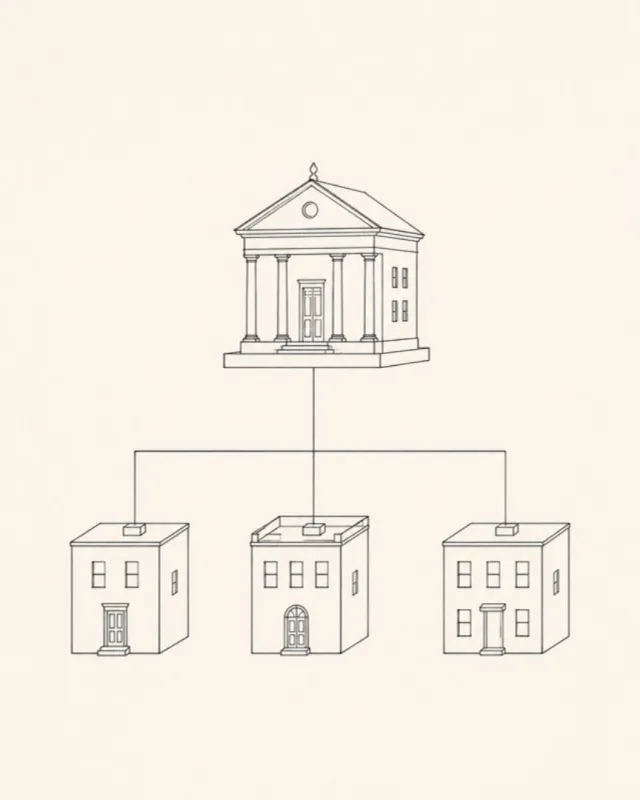
The return is the easiest number to remember from any investment presentation. In a presentation, "8% guaranteed" sounds like a feature of the apartment, like the number of rooms. In practice there are at least four different things called a "guaranteed return", and only some of them bind anyone:
| What you were told | What it actually is | Who is bound |
|---|---|---|
| "The average return in the area is 7%-8%" | A marketing estimate of the market | No one |
| "The developer gives a Guaranteed Return for three years" | A clause in the contract, if it exists, or a discount on the price | The developer, only if the clause is written in the SPA |
| "The management company guarantees a fixed income" | A separate management agreement | The management company, according to its ability to pay |
| "The developer rents the apartment from you and pays 10% a year, and at the end buys it back" | A Lease Back and Buy Back structure | The developer, and the structure may be a security |
What does the law say?
In Dubai: under article 5 of Law 8 of 2007, advertising or exhibiting the sale of an Off-plan property, in Dubai or outside it, requires written approval from the DLD, and every real estate advertisement requires a Trakheesi permit whose number appears in the advertisement. Buyers' money is deposited in a separate escrow account for each project and is used only for its construction (article 9). We did not find in Dubai law any dedicated arrangement protecting a "guaranteed return", so it is governed by the contract itself. In addition, according to a Federal Tax Authority guide from October 2024 as summarised by a local law firm, short-term letting under a Holiday Home permit may fall outside an individual's exemption from corporate tax when turnover exceeds AED 1,000,000.
In Israel: on 20 February 2022 the Israel Securities Authority published a legal staff position (103-45) in which it examined a venture that marketed to investors in Israel housing units in a foreign developer's project. The arrangement included the purchase and registration of the unit in the investor's name, a lease back to the developer for ten years in return for an annual payment of 10% of the investment amount that did not depend on the unit's income, and an option to buy back at a price set in advance according to the investment amount and not according to market value. The staff position was that in these circumstances the agreements are "securities", and that registration in the land register alone does not negate this.
Among others: a fixed payment that does not depend on the specific unit, material decisions about the unit in the hands of the developer alone, restrictions on transferring the rights, a buy-back price set in advance regardless of market value, a uniform price that does not depend on the apartment's characteristics, and a marketer who forbade the investor from contacting the developer directly.
The practical meaning: such a structure is in substance a financial investment in the developer, not the purchase of an apartment. It is exposed to the ability of a single entity to pay, and the protections of someone buying an ordinary apartment do not necessarily help. The general explanation, in any country, is in the guide to guaranteed returns and guaranteed rent in real estate abroad.
What do you do now - step by step
- Ask for the promise in writing: the clause in the SPA or the separate agreement, with the name of the undertaking entity as it is registered.
- Check who has signed: the developer registered with the DLD, a subsidiary, a management company or the marketer. Each of them has a different ability to pay.
- Check what secures the payment: a bank guarantee, a trust, a set-off against the price, or nothing.
- Calculate whether the promise is built into the price: compare the apartment's price with similar transactions in DLD data. A return paid out of your own money is not a return.
- Read what happens at the end of the period: whether the apartment comes back to you vacant, what condition it is in, and whether you are tied to a management agreement.
- Check the marketing licences: the Trakheesi permit number, DLD approval for marketing outside Dubai, and the broker's RERA licence.
- Make sure the money goes into the project's escrow account and not into the account of the marketer or a related company.
- If you have already paid, gather all the documents and correspondence, including the presentation and the messages in which the return was promised, and turn to a lawyer who is not connected with the transaction.
How to spot a promise with nothing behind it
- The return appears in the presentation and the messages, but not in the SPA.
- The undertaking party is a company that is not the registered developer and has no known assets.
- The payment does not depend on the rent the apartment actually generates.
- There is an undertaking to buy the apartment back at a fixed price.
- The price is uniform for all the apartments in the project, regardless of floor, orientation or size.
- The marketer asks you not to contact the developer directly, or that the money pass through him.
- There is no advertising permit number, or the marketer does not know what it is.
- Pressure to sign quickly: "two apartments left", "the price goes up on Sunday".
No single sign proves fraud on its own, but three or four together are a reason to stop. A full list of questions for the marketer is in how to check a real estate marketer abroad, and the difference between a marketer and a lawyer who represents you in marketer, broker and lawyer in a Dubai transaction.
What is the real return likely to be?
There is no official source for an "average return" that can be relied on for a particular apartment. What can be checked are the expenses that reduce any return: the DLD transfer fee (4%), the registration Trustee's fees, annual service charges under Law 6 of 2019, management fees, periods without a tenant, and tax in Israel. In the UAE an individual pays no tax on income from real estate investment that does not require a licence, but in Israel rent is taxed, at 15% on the gross or at the marginal rate. A full calculation in net yield from an apartment in Dubai.
According to the Dubai Media Office, in 2025 more than 270,000 real estate transactions worth AED 917 billion were recorded, and in the first quarter of 2026 the value of transactions rose by 31%. These are volume figures, not return figures, and other sources point to a more mixed picture of sales in the first half of 2026. None of them guarantees anything about a particular apartment.
Common mistakes
- Relying on a screenshot of a message. A promise on WhatsApp is not a clause in the contract with the developer.
- Confusing a "discount" with a "return". A two-year guaranteed return built into the price is a refund of part of your own money.
- Not reading the management agreement. That is usually where the conditions, the exceptions and your commitment period are found.
- Forgetting the tax in Israel. Even a "net" return is taxed in Israel, and there is no foreign tax to credit.
- Waiting. Anyone who identifies a problem after the first payment has gone through needs to act promptly, while the money is in the project's escrow account and its status can be checked.
Questions to ask before signing an agreement with a guaranteed return
- What is the name of the entity undertaking to pay, and is it the developer registered with the DLD?
- In which document is the undertaking written: in the SPA, in an addendum to it or in a separate management agreement?
- Does the payment depend on the rent the apartment actually generates, or is it fixed?
- What is the security: a bank guarantee, a set-off against the price, a trust, or only the word of the undertaking party?
- What happens if the payment does not arrive: is there a deadline, interest, a right to cancel?
- Are you free to sell the apartment during the period, or does the agreement restrict you?
- Who decides on tenants, maintenance and renovations?
- What will the condition and status of the apartment be on the day the period ends?
- Which law governs the management agreement, and where are disputes resolved?
- How much commission does the marketer receive, and from whom?
If for some of the questions you are told "it's standard" or "everyone signs this", ask for the answer in writing. An answer that no one is willing to put in writing is an answer in itself.
What happens if the promise is not fulfilled and I am in the middle of payments?
This is the most sensitive situation. The guaranteed return and the payments to the developer are usually two separate undertakings: even if the party that promised the return does not honour it, your obligation to pay according to the payment schedule in the SPA does not disappear by itself. Under article 11 of Law 13 of 2008, as amended in 2020, when a buyer is in breach, the developer reports to the DLD, and the DLD sends the buyer a 30-day notice. If the breach is not remedied, and depending on the project's completion rate, the developer may, among other things, terminate and retain up to 25% of the unit's value when completion is below 60%, or up to 40% when it is between 60% and 80%. So you do not stop paying "in response" to a broken promise without legal advice, because the loss may be greater than the return that was not paid.
Before you sign / how we assist
We review guaranteed return clauses and management agreements from the buyer's side only: who is undertaking, to what, with what security, and what happens on the day the payment does not arrive. In Dubai we work in coordination with locally licensed lawyers, check the developer, the project registration and the marketing permits, and connect the transaction to the Israeli side: tax, reporting and source of funds. The decision whether to buy is yours; we make sure it is taken on the basis of what is written, not on the basis of what was said.
This guide is general information as of November 2026 and is not legal advice, investment advice or an opinion on a particular transaction. We do not promise returns and do not recommend projects, and each transaction is examined on its merits.
Frequently asked questions
The marketer promised an 8% return on an apartment in Dubai - is it real?
It depends on what is written in the contract. If the return appears only in the presentation or in messages, there is no undertaking. If it is in the contract, check who is undertaking, what secures the payment and whether it is built into the price.
Is a guaranteed return in Dubai a fraud?
Not necessarily. It can be a legitimate contractual clause of a developer or a management company. It becomes problematic when it is not written, when the undertaking party is unidentified or has no assets, and when it comes with pressure to sign and with money passing through the marketer.
Who pays the guaranteed return?
Whoever has signed the undertaking: the developer, a related company or a management company. Its ability to pay is the entire value of the promise, so check who it is and what stands behind it.
Can an apartment with a guaranteed return be considered a security?
According to the Israel Securities Authority staff position of 20.2.2022, a structure of leasing back to the developer with a fixed payment that does not depend on the unit and a buy-back option at a fixed price was, in the circumstances examined, considered a security, even when the apartment was registered in the investor's name.
How do you check whether the project may be marketed in Israel?
Under article 5 of Law 8 of 2007 in Dubai, advertising an Off-plan sale even outside Dubai requires the written approval of the DLD, and every advertisement requires a Trakheesi permit. Ask the marketer to see both.
Is the guaranteed return built into the apartment's price?
Sometimes yes. Compare the price with similar transactions in DLD data. If the price is above the market by roughly the guaranteed amount, the "return" is a refund of part of your own money.
What happens when the guaranteed return period ends?
It depends on the contract and the management agreement: whether the apartment comes back to you vacant, in what condition, and whether you are tied to continued management. This is the part worth reading before signing.
Do you pay tax in Israel on a guaranteed return from Dubai?
Yes. An Israeli resident is taxed on the rent or the payment from the apartment, under the 15% track or at the marginal rate. In the UAE an individual pays no tax on such income, so there is no credit.
I have already paid and I fear the promise is empty. What do I do?
Gather the contract, the correspondence, the presentation and the payment confirmations, check which account the money went into, and turn to a lawyer who is not connected with the transaction to examine the situation and the options.
 Read next · 13 min readMy Dubai Apartment Differs from the Specification: Your Rights When the Area, View or Finishes Do Not MatchDubai unit differs from the spec: when a shortfall over 5% is compensated, what to do about finishes or view, how to document before handover, and your options.Read the guide
Sources
- Israel Securities Authority - Legal staff position 103-45: Report summarising findings on public offerings of securities (20.2.2022)
- Dubai Legislation Portal - Law No. 8 of 2007 Concerning Escrow Accounts for Real Estate Development
- Dubai Media Office - DLD fines real estate companies over advertising requirements (20.10.2020)
- Dubai Media Office - Dubai real estate market records new historic milestone (12.1.2026)
- Dubai Media Office - Dubai real estate transactions surge 31% in Q1 2026 (9.4.2026)
- UAE Ministry of Finance - Cabinet Decision on natural persons (49/2023)
- Hadef & Partners - FTA guide on real estate investment for natural persons (October 2024)
- Afridi & Angell - Purchasing and Selling Commercial Real Estate, Emirate of Dubai (April 2026)
