






In brief
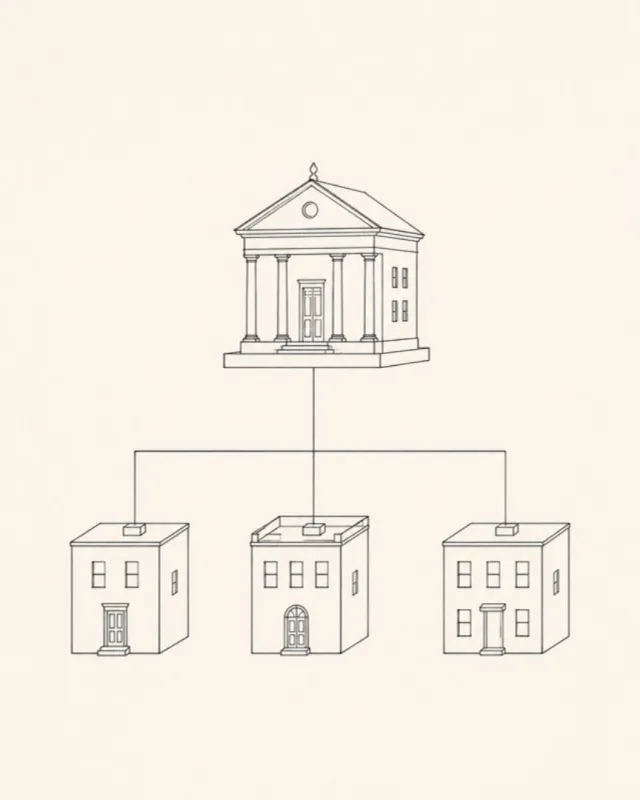
A “handover file” is the set of documents proving that the property is registered in your name, that it is insured and lawfully connected, and that it carries no debts. You build it on the day ownership is registered in your name, because that is when all the documents are available and the people who prepared them are still involved. In Romania, Greece, Cyprus and Bulgaria the components are similar, but the document that proves ownership, the tax reporting duties and the building documents differ from country to country.
Key takeaways
- 1The first document in the file is a current extract from the land registry showing you as owner. A signed contract is not yet proof of ownership.
- 2Keep every payment record from the purchase: price, taxes, notary and lawyers. They will be used to calculate Israeli capital gains tax on the day you sell.
- 3In Romania the property is declared to the local authority within 30 days of acquisition. In Greece the E9 statement is created automatically when the deal was reported through myPROPERTY, but it is worth checking.
- 4In Cyprus, as long as there is no title deed in your name, proof that the contract was deposited at the Land Registry is the key document in the file.
- 5For a new building in Bulgaria, ask for the use permit (Act 16), and in all four countries ask for the energy performance certificate.
On signing day you are surrounded by a lawyer, a notary, an agent and sometimes a developer, and each of them holds part of the documents. Six months later, when a tenant asks for a lease, a bank asks for an extract or the accountant in Israel asks for the purchase cost, you discover that the documents are scattered across emails, folders and offices in another country. This guide sets out what should be in one organised file on the day the property is registered in your name.
What is a “handover file”, and why build it on registration day?
A handover file is the set of documents that proves four things: that the property is registered in your name, that it was built and is used lawfully, that it is insured and connected to utilities in your name, and that it carries no debts. You build it on registration day because all the parties are still available, and a missing document can be requested without searching for whoever held it.
For a new property the file opens even earlier, on handover day. On the checks that day and the handover protocol, see the guide to taking over a new apartment or villa in Romania.
Which documents should be in the file in every country?
The names change between countries, but the components recur. This is the basic list:
| Document | What it proves | When you will need it |
|---|---|---|
| A current land registry extract in your name | That you are the registered owner, and which charges or notes are registered on the property | On sale, mortgage, inheritance and in any dispute |
| The deed or final contract, as a notarial copy | The terms of the deal, the price and the description of the property | On sale, in tax reporting and in the next buyer's due diligence |
| Payment records: price, taxes, notary, lawyers and agent | The actual purchase cost | When calculating capital gains tax in Israel and in the property's country |
| Registration of the property for local tax and a tax identification number | That the local authority knows you are the owner and sends you the assessment | For every property tax payment |
| The building permit and the completion certificate or use permit | That the building was built and is used lawfully | On sale, financing and letting |
| Energy performance certificate | The property's energy rating | When letting and selling |
| Insurance policies | Cover for the building and contents and, depending on the country, compulsory insurance | When damage occurs, and sometimes as a condition for a tax discount |
| Condominium documents: rules, budget and a no-debt certificate | Your obligations towards the building, and that you did not inherit a debt | At every meeting, special expense or sale |
| Electricity, water, gas and internet contracts, and photographed meter readings | That the bills are in your name and from what date | In a dispute over an old debt and when handing over to a tenant |
| Handover protocol, list of keys and codes, and inventory | What you received and in what condition | In a defects claim and when letting |
| Power of attorney and details of the local representative | Who may act on your behalf and in what | When you are in Israel and action is needed there |
A sale of property abroad is taxed in Israel under the Income Tax Ordinance, and the gain is calculated from the adjusted purchase cost. Without records of the cost and expenses, it will be hard to prove them years later. Scan every transfer confirmation on the day of payment.

What should be in the file in Romania?
In Romania ownership is registered in the land book (Cartea Funciară) maintained by the cadastre agency ANCPI. After registration, order an extract (extras de carte funciară) showing you as owner. On reading the extract, see the guide to the land registry extract in Romania.
- A current land registry extract in your name, and a copy of the notarial contract.
- Declaration to the local authority: under article 461(2) of the Fiscal Code, new owners declare the building within 30 days of acquisition, and the tax applies from 1 January of the following year. Keep the declaration with its receipt stamp.
- PAD insurance against earthquake, flood and landslide, which is compulsory for every home, alongside optional voluntary insurance if you chose it.
- For a new building: the reception protocol on completion of works, and the energy performance certificate that must be attached to it. See registering a new building in the land book.
- Owners' association: a certificate that nothing is owed to the association, the budget and the latest minutes. See the guide to the owners' association in Romania.
- Utility contracts in your name and photographed meter readings from handover day.
What should be in the file in Greece?
In Greece ownership arises on registration in the cadastre (Κτηματολόγιο) or, in areas not yet transferred to it, in the land registry office. Every property in the cadastre has an identification number (KAEK), and a certificate of registration (Πιστοποιητικό Καταχώρισης) confirms that the sale was registered.
- A cadastre certificate of registration confirming registration of the sale, and a copy of the notarial deed with the KAEK.
- A tax number (AFM) and active access to myAADE, through which assessments are received.
- The E9 property statement: according to the tax authority AADE, the E9 is created automatically when the transfer tax return was filed through myPROPERTY. Log into the account and check that the property appears with the correct area and features, because ENFIA is calculated from them. See the ENFIA guide.
- Energy performance certificate (ΠΕΑ): under article 12 of Law 4122/2013, the seller shows it to the buyer and hands it over. Its protocol number is also recorded in the declaration of a lease.
- The building file: the permit documents and the electronic building identity (Ηλεκτρονική Ταυτότητα Κτιρίου) prepared for the transfer.
- Building insurance against earthquake, fire and flood, if you want to apply for the ENFIA discount.
What should be in the file in Cyprus?
In Cyprus only a title deed in your name, issued by the Department of Lands and Surveys (DLS), confers full ownership. In new projects the separate deed is sometimes issued years after handover, so the file is built differently when there is no deed yet. See the guide to title deeds in Cyprus.
- The title deed in your name, if already issued.
- If there is no deed: the original contract and proof of its deposit at the District Land Office under Law 81(I)/2011. The deposit is what protects you against a double sale or a new charge. See the guide to depositing the sale contract.
- The status of the building's certificate of final approval (under the Streets and Buildings Regulation Law, Cap. 96), because without it no separate deed will be issued.
- Receipts for payments to the municipality, the sewerage board and the water board. The Department of Lands and Surveys requires them in some procedures, so it is worth keeping them from day one.
- Energy performance certificate, which will be required when you let or sell.
- Building and contents insurance, and the rules and budget of the management committee if the property is in a shared building.
The annual immovable property tax in Cyprus was abolished from 1 January 2017, but municipal tax, sewerage tax and local fees still apply, so registering your address with the local authority matters.
What should be in the file in Bulgaria?
In Bulgaria ownership passes on signing a notarial deed, and the notary sends it for registration in the Property Register. For a new building, the document that turns the apartment into a property that may lawfully be lived in, financed and sold is the use permit that follows Act 16. See the guide to Act 14, Act 15 and Act 16.
- The notarial deed with the registration stamp, and a current certificate of encumbrances showing the property is clear.
- For a new building: Act 16 and the use permit (разрешение за ползване), not just Act 15.
- Municipal property tax: under article 14(3) of the Local Taxes and Fees Act, no annual tax declaration is filed for a property acquired by purchase. Still check with the municipality that the property is registered in your name and where the assessment is sent. For new construction and in other cases, a two-month period applies for notifying the municipality.
- The condominium: the building manager's details and the monthly contribution to the repair fund, which is compulsory under article 50 of the Condominium Management Act.
- Energy performance certificate, and electricity, water and heating contracts in your name.
How do you keep the file when you live in Israel?
- Full scanning of every document on the day you receive it, in one folder per property, with file names that start with the date.
- Original versus copy: record where each original document is held, with you, with the local lawyer or with the notary.
- Translation and apostille: when a document is needed in Israel, for example by the accountant or in inheritance proceedings, it needs a translation and sometimes an apostille.
- A copy for the accountant in Israel: send them the purchase cost records in the first year.
- Annual update: once a year order a new extract and check that nothing was registered without your knowledge. The annual deadline calendar for each country is in the annual calendar for owners of property abroad.
What to do before registration, and how we accompany you
The document list is best set in the contract: who delivers what, and by when. We prepare such a list for each transaction and check on registration day that the extract, the deed, the tax declarations and the building documents are in the client's hands, together with licensed lawyers and notaries in the property's country. What to do with the property in the years after registration is explained on the property owners page.
What is stated here is general information correct as of November 2026 and is not legal advice for a specific case. Requirements differ between authorities and types of property, and some of the data is based on secondary sources. Check each requirement with a lawyer in the property's country.
Frequently asked questions
Which document proves that the property abroad is really mine?
A current land registry extract showing you as the registered owner, or in Cyprus a title deed in your name. A signed contract proves a right to receive the property, but not registered ownership. After registration, order a new extract and keep it in the file.
What do you do in Cyprus when there is no title deed yet?
Keep the original contract and proof of its deposit at the District Land Office under Law 81(I)/2011, and check the status of the building's certificate of final approval. The deposit protects against a double sale of the property or a new mortgage on it.
Do I need to declare the property to the local authority after buying?
In Romania yes: within 30 days of acquisition, under article 461(2) of the Fiscal Code. In Greece the E9 is created automatically when the deal was reported through myPROPERTY, and in Bulgaria no declaration is filed for a property acquired by purchase. In every country it is worth making sure the authority sends the assessment to you.
Why keep the purchase receipts?
Because in Israel the sale of property abroad is taxed according to the proven purchase cost and expenses. Without records the cost is hard to prove years later, which may increase the tax.
Do I still need an energy performance certificate after I have bought?
Yes. You will need it when you let or sell. In Greece, for example, its protocol number is recorded in the declaration of a lease, and in Romania, for a new building, it is attached to the reception protocol.
 Read next · 9 min readClosing a Company Abroad: Voluntary Liquidation vs Strike-Off, Tax Clearance, Closing the Bank Account and the Tax Consequences in IsraelHow to close a company abroad: voluntary liquidation vs strike-off in Romania, Bulgaria, Greece, Cyprus and Delaware, tax clearance, final returns, bank account and Israeli tax.Read the guide
Sources
- ANCPI - Agenția Națională de Cadastru și Publicitate Imobiliară
- Portal Legislativ - Romanian Fiscal Code (Law 227/2015)
- PAID - compulsory home insurance (PAD)
- Taxheaven, Law 4122/2013 article 12 (energy certificate on sale and lease)
- AADE, Unified Tax on the Ownership of Real Estate (E9-ENFIA)
- Global Law Experts, How to check property title in Greece
- Cyprus Department of Lands and Surveys, Specific performance of sale contract
- Legal 500, Late filing of sale contracts in Cyprus
- PwC Tax Summaries, Cyprus: Other taxes
- Bulgarian Local Taxes and Fees Act, article 14 (text, kik-info)
- Innovires, Condominium: rights, obligations and management (2026)
- CMS, Acquisition of off-plan property in Bulgaria
- Income Tax Ordinance (Wikisource, Hebrew)
