






In brief
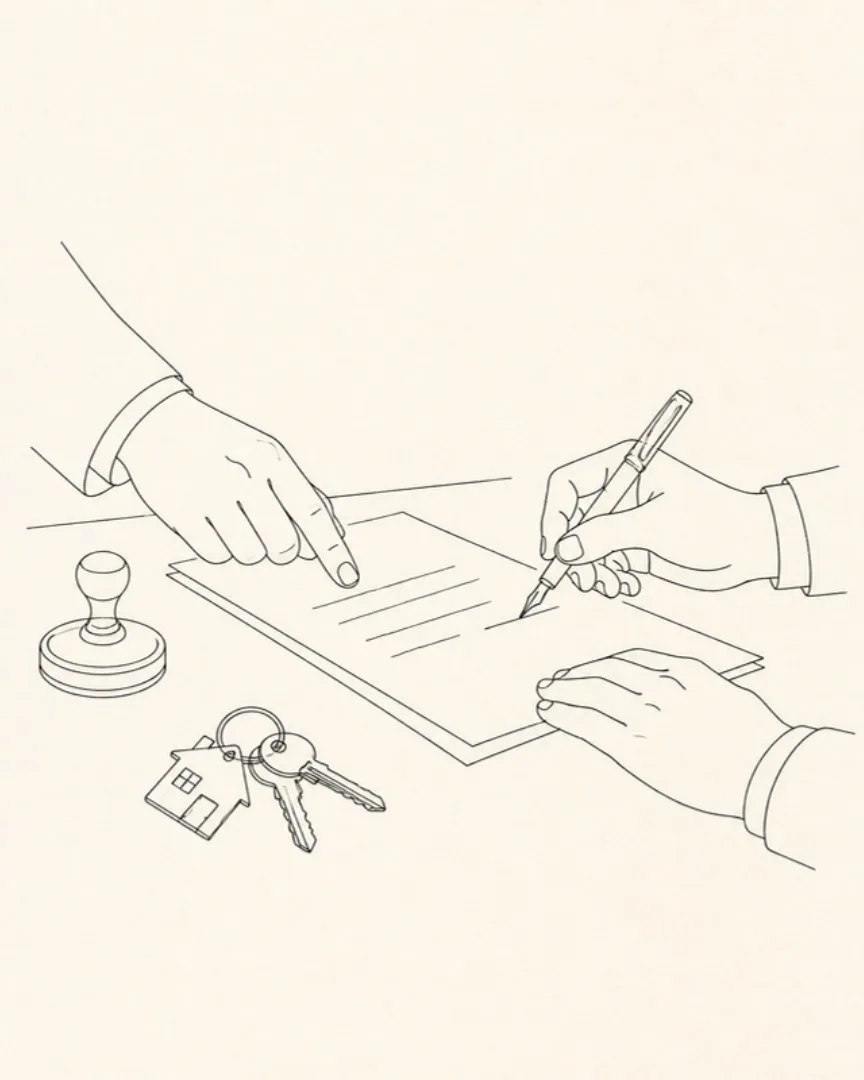
In Romania a new building first undergoes acceptance on completion of the works (recepția la terminarea lucrărilor) by a committee that includes a representative of the local authority, and only afterwards is it handed over to each buyer under a handover protocol. On handover day you inspect the property room by room, record every defect in a signed list with deadlines for repair, and collect the documents. Under Law 169/2026, hidden defects are covered for 10 years from acceptance and structural defects for the entire life of the building.
Key takeaways
- 1Two different documents: the acceptance protocol concerns the building as a whole, and the handover protocol concerns your unit. Ask to see both.
- 2Every defect goes into a written list, signed by both parties, with a deadline for each repair. A defect that was not recorded will have to be proved later.
- 3Under Law 169/2026 (Articles 424 and 451), hidden defects are covered for 10 years from acceptance, and structural defects for the entire life of the building.
- 4PAD insurance against earthquake, flood and landslide is mandatory for every home.
- 5Legally, the property is yours when you are registered as owners in the land book (Cartea Funciară), not when you received the key.
Key day is an exciting day, and precisely for that reason it is easy to sign a piece of paper on it without checking thoroughly. In Israel people are familiar with the home inspection (“bedek bayit”); in Romania the legal framework is different, and so is the order of events. This guide explains what happens before handover, what is checked on the day itself, and what needs to be finalised afterwards for the purchase to be completed.
What is the difference between acceptance of the building and handover to the buyer?
Acceptance of the building is a formal procedure vis-à-vis the authority; handover is an event between you and the developer. The framework is set by the Planning and Construction Code (Law 169/2026) and by the acceptance regulations (HG 273/1994), which remain in force until they are replaced.
| Stage | What happens | Who is involved |
|---|---|---|
| Acceptance on completion of the works | A committee confirms that the construction complies with the permit and the design, and records defects and deadlines for their repair | The developer, the designer, the contractor and a representative of the local authority |
| Handover to the buyer | The unit passes to you, and both parties sign a protocol | You and the developer |
| Warranty period | Defects that arise are repaired by the contractor | The contractor, alongside the developer |
| Final acceptance | Carried out when the warranty period ends | The developer and the other parties |
In an off-plan purchase, the final contract is signed before a notary after the building has been completed and registered, and only then does ownership pass.
Every defect goes into a written list, signed by both parties, with a deadline for each repair. A defect that was not recorded will have to be proved later.
What should you ask the developer for before handover day?
- The building's acceptance protocol (procesul-verbal de recepție la terminarea lucrărilor).
- A date and planned duration for the handover, so that you can attend with an experienced companion or with a professional inspector.
- The finishes specification in the contract, so that you can compare what was delivered against what was promised.
- The plans of the unit, including the areas.

What is checked on handover day itself?
You go room by room, in daylight, with a torch, a spirit level and a phone camera. This is the basic checklist:
| Area | What to check |
|---|---|
| Interior surfaces | Whether there is a crack in the plaster, a damp stain, a floor that is not level or parquet with gaps |
| Openings | Every window and door: whether they close properly and lock, whether the seal is intact, and whether condensation builds up inside the double glazing |
| Water | Running every water point, drainage in the showers and toilets, and checking the cabinets under the sinks for drips |
| Electricity | Checking every socket and switch, and clear labelling of the circuits in the distribution board |
| Climate control | Actually switching on the heating and cooling systems; with underfloor heating, making sure there is no cold zone |
| Roof and balconies | That water drains away and no puddles remain |
| External envelope | Fence and gate, yard paving, garden drainage and parking spaces |
| Meters | Photographic record of every meter, with date and time, before the accounts are transferred |
You can sign the handover protocol when a detailed list of defects is attached to it, signed by both parties, with a deadline for each repair. The main thing is that every defect is written down. A defect that was not recorded on handover day will have to be proved later.
Which documents should you have in hand at the end of the day?
| Document | Why it matters |
|---|---|
| Handover protocol (proces-verbal de predare-primire) | Evidence of the date on which you received the property and of its condition on that day |
| Signed list of defects | What you can demand to be repaired, and by when |
| Energy performance certificate | You will need it when you sell or let; it shows the energy rating |
| Extract of the technical book (cartea tehnică) | Instructions for the operation and maintenance of the building and its systems |
| Warranties and operating manuals | For the hot water system or heat pump, the air conditioners and the appliances |
| Keys, remote controls and codes | For the gate, the alarm system and the intercom |
What needs to be transferred into your name after handover?
- Electricity: a contract with a supplier of your choice; the distribution operator remains the same operator. The energy regulator ANRE operates a tool for comparing offers.
- Gas, if there is a connection: the same principle of supplier and distributor.
- Water and sewerage: a contract with the local operator.
- Waste collection: registration with the local authority or with its operator.
- Internet and television: with the provider of your choice.
- Insurance: PAD insurance against earthquake, flood and landslide is mandatory; beyond it you may add optional insurance for fire, water damage and contents.
- Local tax: registration of the property with the tax office of the municipality or the commune.
For most connections you will need an identity card or passport, the handover protocol or the sale contract, and the meter readings. If you live abroad, a local representative with a power of attorney can handle this for you.
When is the property really yours?
When you are registered as owners in the land book, which is kept by the cadastre authority ANCPI. The notary who sent the final contract for registration is the one who files the application. After registration, ask for an updated extract in which you appear as owners, and keep it with the rest of the property documents.
And what if a defect is discovered after a year or three?
Not every problem is visible on the first day. Under Law 169/2026 (Articles 424 and 451), hidden defects discovered within 10 years of acceptance, and structural defects for the entire life of the building, are the responsibility of the designer, the contractor and the other parties involved. In addition, the developer and the contractor are required to hold 10-year liability insurance for damage discovered after acceptance (Article 556). Report every defect in writing, with photographs and dates, as soon as you discover it.
What to do before handover, and how we accompany you
The handover conditions are set in the contract, so it is worth checking them even before signing: what will count as completion, what happens with defects, and what the deadlines for repair are. We review the handover and warranty clauses in the contract, and coordinate the final contract and the registration with lawyers and notaries licensed in Romania. The engineering inspection on handover day is carried out by a professional inspector.
What is stated here is general information correct as of October 2026 and is not legal or technical advice for a specific case. The conditions that apply to you are set in your contract.
Frequently asked questions
What is building acceptance (recepție) in Romania?
A procedure under Law 169/2026 and the acceptance regulations, in which a committee with the developer, the designer, the contractor and a representative of the local authority checks that the building complies with the permit and the design, and records defects with deadlines for repair. Only after it is the home handed over to the buyers.
How long is a contractor liable for defects in a new home in Romania?
Under Law 169/2026 (Articles 424 and 451), for hidden defects discovered within 10 years of acceptance, and for structural defects for the entire life of the building.
Can you take over a new home in Romania without being there?
Yes, through a representative with a notarial power of attorney. Nevertheless, many buyers prefer to be present at the inspection or to send a professional inspector on their behalf.
Which insurance is mandatory for a home in Romania?
PAD insurance against earthquake, flood and landslide is mandatory for every home. Insurance for fire, water damage and contents is optional.
 Read next · 7 min readA Will for an Israeli With Property in Romania: Choice of Law, Form of the Will and Coordination With the Will in IsraelHow to write a will that works for property in Romania: Regulation 650/2012 and choice of law, notarial or handwritten wills, reserved shares, the Israeli will.Read the guide
Sources
- Portal Legislativ - HG 273/1994, Regulamentul de recepție a construcțiilor
- Inspectoratul de Stat în Construcții (ISC)
- ANRE - Autoritatea Națională de Reglementare în Domeniul Energiei
- ANCPI - Agenția Națională de Cadastru și Publicitate Imobiliară
- PAID - Pool-ul de Asigurare Împotriva Dezastrelor Naturale (asigurarea obligatorie PAD)
The information in this guide is general in nature and does not constitute legal or tax advice on any specific transaction. Every transaction is assessed on its own facts.