






In brief
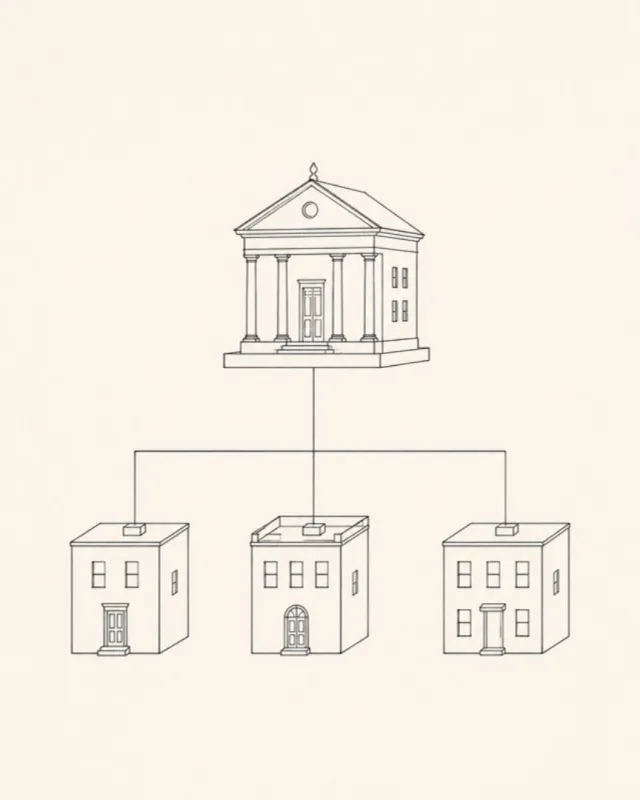
In a “combination deal” (land-for-units deal), the landowner does not receive the full consideration in cash, but apartments or space in the project the developer builds, and sometimes a combination of cash and space. In Greece the model is known as αντιπαροχή, and in Romania the tools used include an asociere în participațiune contract under the Civil Code, a superficie right, or a combination of a sale contract and a construction contract. In every country the agreement needs to set out which units are allocated to each party, deadlines, security, who bears the permit risk, what happens on termination, and how each party's rights are registered in the land registry.
Key takeaways
- 1A combination deal saves the developer the cash price of the land, but turns the landowner into a partner in the project's risk.
- 2The most sensitive point is the period between the transfer of the land to the developer and the delivery of the apartments to the landowner. That is where security is needed.
- 3The bank financing the construction will want a mortgage over the entire land. The landowner's consent to that mortgage should be resolved in the agreement, before approaching the bank.
- 4The permit risk should be in writing: a deadline for filing and for obtaining a permit, who funds the design, and what happens if the permit is not obtained or is obtained with smaller building rights.
- 5Registering the rights in the land registry, or depositing the contract where local law allows, is part of the protection and not a formality.
A developer who finds good land abroad cannot always pay the full price for it in cash, or does not always want to. The landowner, for their part, sometimes prefers to receive apartments in the new building instead of money. This is how a combination deal is born: the developer receives the land or rights in it, builds, and delivers part of the units to the landowner. The same logic also applies to a joint venture with a local partner who brings land, permits or connections, while the developer brings capital and management.
This guide explains how to structure such an agreement and what each party should require. It is general and does not replace a review of the law in the project's country, because the form of the agreement, the registration and the tax differ from country to country.
What is a combination deal, and how does it differ from buying land?
In an ordinary land purchase the developer pays and receives ownership, and the relationship with the seller ends. In a combination deal the consideration to the landowner is units that do not yet exist, so the relationship continues until the building is delivered and registered. The landowner in practice becomes a buyer of off-plan apartments from the same developer, and the developer depends on the landowner at every stage that requires the landowner's signature: in filing for the permit, in the mortgage to the bank and in registration.
| Consideration in cash | Consideration in units (combination deal) | Combination | |
|---|---|---|---|
| Capital the developer needs upfront | The full land price | Lower, but higher design and construction costs according to the number of units | In between |
| The landowner's risk | Ends on receipt of payment | Depends on completion of the project and the developer's financial strength | Partial |
| Units the developer sells | All the units | Only the units left to the developer | Most of the units |
| Complexity of the agreement and registration | Low | High: allocation, deadlines, security and registration | High |
| Common point of dispute | The price | Quality of the units, delays and consent to the mortgage | Both |
How does αντιπαροχή work in Greece?
αντιπαροχή is a long-established method in Greece in which the plot owner does not pay for the construction, and the contractor or developer builds at its own expense and receives part of the units in return. Many of the older residential buildings in Athens were built this way. Usually the landowner transfers to the developer undivided shares in the plot corresponding to the units that will remain with the developer, sometimes in stages according to construction progress, and the developer sells its units to third parties in order to finance the construction.
A few points worth knowing about Greece:
- Form and registration. A transfer of rights in real estate is made by notarial deed and registered in the Hellenic Cadastre (Κτηματολόγιο). The undertaking to transfer shares in the plot must meet these formal requirements already at the preliminary agreement stage.
- Tax. According to a 2006 directive of the Greek Ministry of Finance (ΠΟΛ 1061/2006), the delivery of units to the landowner in such a deal is subject to VAT when the building permit was issued on or after 1.1.2006. The VAT regime for new construction in Greece has changed since then, and the current rules should be checked. See the guide to VAT on a new apartment in Greece.
- Permit. The permit application is filed by an engineer on behalf of the owner or whoever has a right in the land, so the agreement should oblige the landowner to cooperate. See the guide to the building permit for a new project in Greece.
- Existing construction. If there are structures or building violations on the plot, it should be established in advance who regularises them and at whose expense. See the guide to building violations in Greece.
How is such a deal structured in Romania?
In Romania there is no single “combination” contract in the law, and the deal is built from several tools recognised by the Civil Code. The choice between them affects who owns the land and the building during construction, and therefore each party's risk.
| Structure | What it means | What to watch for |
|---|---|---|
| Asociere în participațiune (Articles 1949-1954 of the Civil Code) | A contract under which one party gives the others a share in the profits and losses of a specific operation | It has no legal personality (Article 1951). The assets each party contributes remain its property, unless otherwise agreed and the required publicity formalities have been carried out (Article 1952). The contract can be proved in writing only (Article 1950) |
| A superficie right for the developer | The landowner grants the developer a right to build and hold the building on the owner's land | The scope of the right is set in the instrument creating it. It is usually made by notarial deed and registered in the land book (Cartea Funciară) |
| Sale of land in exchange for future units | The landowner sells to the developer, and the consideration is an undertaking to deliver units in the building | The landowner loses ownership upfront, and therefore needs strong security for the undertaking |
| Joint company | The landowner transfers the land to a project company and receives shares in it | Turns the deal into a partnership in a company. See the guide to the developer company structure in Romania |
In all the structures, the transfer of a real right in real estate in Romania is made by notarial deed and registered in the land book. In addition, a developer selling its units to buyers before completion is subject to the new rules of Law 169/2026. See the guide on moving from investor to developer, the guide to planning and building in Romania and the guide to the developer company structure in Romania.
In Cyprus an αντιπαροχή contract can be deposited with the Department of Lands and Surveys, within six months of signing, for a fee of 50 euros according to the Department's website. The effect of the deposit on such a contract should be checked against the Sale of Land (Specific Performance) Law. See the guide to depositing a sale contract in Cyprus.
Which clauses must be in the agreement?
The following clauses recur in every country, even when the legal structure differs. Each of them answers a question that will certainly arise during the project.
- Allocation of units. Which units the landowner receives: floor, orientation, area, parking spaces and storage rooms, according to a plan attached to the agreement. If the allocation is in percentages, it should be set out how they translate into units and what happens if the permit is obtained with building rights different from those expected.
- Technical specification. The finish level of the units the landowner receives, usually identical to the units the developer sells. Without an attached specification, every change becomes a dispute.
- Milestones and deadlines. Filing the permit application, obtaining the permit, start of construction, completion of the frame, delivery and registration. Each milestone has a deadline, and agreed compensation for delay.
- Permit risk. Who funds the design, what happens if the permit is refused or delayed beyond the deadline, and who owns the plans if the deal is terminated.
- Security for the landowner. A bank guarantee, a charge over the developer's units, transfer of the land in stages, or a combination.
- Financing and mortgage. Whether, and to what extent, the landowner agrees to mortgage the land in favour of the financing bank, and how the landowner's units are released from the mortgage on delivery.
- The developer's sales. When the developer may sell its units, and whether the landowner needs to sign anything for that purpose.
- Taxes and costs. Who pays transfer tax, VAT, fees, the notary and registration, at each stage.
- Defects and warranty. A defects liability and warranty period for the landowner's units, as for an ordinary buyer.
- Termination and step-in. What happens if the developer does not meet the milestones, becomes insolvent or abandons the project. Whether the landowner can replace the developer, and what the developer receives for the investment already made.
- Registration. Which rights are registered, when and with whom, including notations or deposit of the contract where local law allows.
- Governing law and dispute resolution. In a real estate transaction, property and registration matters are subject to the law of the country where the land is located. The rest of the agreement should be aligned with that law and not copied from a template from another country.
How is the landowner protected?
The landowner is exposed in the period between the transfer of the land, or its mortgage, and the delivery of the landowner's units. The main protection is therefore not to transfer more than the landowner has already received security for:
- Transfer of shares in the plot in stages, according to construction progress, and not everything upfront.
- A bank guarantee for the value of the landowner's units or part of it, until delivery.
- A charge in the landowner's favour over the developer's units, or a right to receive alternative units.
- A right to terminate and receive the land back if the first milestones, such as the permit and the start of construction, have not been achieved on time.
- Consent to the mortgage to the bank only on written terms: a maximum amount, use of the funds for the project, and release of the landowner's units on delivery.
And how is the developer protected?
The developer invests money in design, permits and construction on land that is not entirely its own. It needs to ensure that the landowner cannot stop the project midway:
- An undertaking by the landowner to sign every document required for the permit, the financing and registration, and sometimes an irrevocable power of attorney for these acts, to the extent local law allows.
- Representations by the landowner on ownership, the absence of mortgages and attachments and the absence of claims, with an independent check in the land registry.
- The consent of all the registered owners. Land owned by several heirs or by spouses requires the signature of all of them.
- A clear mechanism for changing the allocation if the permit is obtained with different building rights, so that this does not turn into a new negotiation.
- Compensation for the investment in design if the landowner terminates or breaches.
In practice, the bank financing the construction will want a first-ranking mortgage over the entire land, including the part that will belong to the landowner. A landowner who did not agree to this in advance may refuse, and the project will stop. The mortgage and release mechanism should therefore be written into the combination agreement and checked against the requirements of local banks before signing. See the guide to development project financing.
What needs to be checked on the Israeli side?
In a combination deal the consideration to the landowner is units and not money, and the Israeli developer receives land without paying cash for it. Both of these facts have tax implications in the project's country, and sometimes also in Israel, especially if the developer operates through a foreign company. This is checked with an accountant before signing. If the developer raises Israeli investors for its share in the project, the rules in the guide to raising money from Israelis also apply.
Checklist before signing a combination agreement
- Check the ownership, mortgages and registered owners in the land registry.
- Check the building rights and the planning risks before agreeing on the allocation.
- Choose the legal structure in the project's country with a local lawyer: sale, superficie, contractual partnership or joint company.
- Attach an allocation plan and a technical specification to the agreement.
- Set milestones with deadlines and a clear consequence for delay.
- Define the security for the landowner and the mechanism for the mortgage to the bank.
- Set out who pays each tax and fee, and check the implications in Israel.
- Set out what is registered, when and where.
How do we support such a deal?
We start from the question of what each party receives and when, and what happens if the project stops midway. From there we build the deal structure, the agreement and the security mechanisms, and check them against local law together with lawyers licensed in the project's country and against the financier's requirements. It is worth doing this work before agreeing on percentages with the landowner, because after that it is hard to change the basis.
This article is general information as of November 2026 and is not legal or tax advice for a specific case. The form of the agreement, the registration and the taxation differ from country to country. Before signing a combination or joint venture agreement, it is worth consulting a lawyer and an accountant who work only for you.
Frequently asked questions
What is αντιπαροχή in Greece?
A long-established method in Greece in which the plot owner does not pay for the construction, and the contractor or developer builds at its own expense and receives part of the units in return. The landowner transfers to the developer shares in the plot corresponding to the developer's units, sometimes in stages, and receives the remaining units in the finished building.
How is the landowner protected if the developer does not finish the construction?
Mainly through security: transfer of the land in stages and not everything upfront, a bank guarantee, a charge over the developer's units, and a right to terminate and receive the land back if the first milestones have not been achieved. Registering the rights in the land registry is also part of the protection.
Must the landowner agree to mortgage the land to the bank?
The landowner is not obliged to, but without this consent it is difficult to obtain bank financing for the construction. It is therefore customary to write into the combination agreement in advance the terms on which the landowner agrees to the mortgage: a maximum amount, the use of the funds, and release of the landowner's units on delivery.
What happens if the permit is obtained with fewer building rights than expected?
It depends on what the agreement says. If the allocation was set in percentages, a mechanism is needed to translate them into units under the actual permit. If specific units were set, it should be determined who absorbs the difference. Without such a clause, a dispute is almost certain.
Can the same agreement be used in Greece and in Romania?
No. The commercial principles are similar, but the form of the agreement, the notarial requirements, the registration and the taxation differ. In Romania, for example, the deal can be structured as an asociere în participațiune, as a superficie right or as a sale in exchange for units, and each structure has a different outcome.
 Read next · 9 min readFinancing a Development Project Abroad: Senior Bank Loan, Mezzanine, Preferred Equity and Investor Loans, and What the Lender Will Require of YouHow development finance abroad is structured: senior loan, mezzanine, preferred equity, investor loans, what the bank requires and what to check in Israel.Read the guide
Sources
- Romanian Civil Code (Law 287/2009), Article 1949 - asociere în participațiune (Legeaz)
- Romanian Civil Code, Article 1952 - Status of the assets contributed to the partnership (Notari.pro)
- Romanian Civil Code, Article 695 - Scope of the superficie right (Notari.pro)
- Legislație.just.ro - Legislation portal of the Romanian Ministry of Justice
- Greek Ministry of Finance - ΠΟΛ 1061/2006 (Forin)
- Cyprus Department of Lands and Surveys - Deposit of an αντιπαροχή or exchange contract
- Neos Kosmos - On the αντιπαροχή system in Greece
