





In brief
A real estate group purchase abroad is exactly as safe as its legal structure: what is registered in each investor's name in the country of the property, where the money sits until registration, and what the investors' agreement says about decisions, capital calls and exit. Before joining, you also check who represents whom, and whether the offer to Israelis complies with the Israeli Securities Law, which allows an offer without a prospectus to up to 35 offerees within 12 months and to the investors listed in the First Schedule.
Key takeaways
- 1A "group purchase" is not one legal structure. It can be direct co-ownership, a dedicated local company, an Israeli company or partnership, or a fund, and each carries a different risk.
- 2The investors' agreement should set out who decides what, what happens when an investor fails to meet a capital call, how a deadlock is broken and how you exit.
- 3The money should sit in an account named in the contract and be released against milestones that can be verified, not in the organiser's account.
- 4Under section 15A of the Israeli Securities Law and the regulations made under it, an offer to up to 35 offerees within 12 months is not an offer to the public. You count everyone who received an offer, not only those who invested.
- 5An Israeli resident reports income from the property and its sale in Israel, and the group's holding structure changes how it is taxed.
- 6The group's lawyer, or the organiser's lawyer, is not your lawyer. Have the documents checked independently before the first transfer.
A group purchase abroad sounds simple: several investors join forces, buy land, a building or a number of apartments together, and share the profit. In practice, the words "group purchase" or "investors' club" can hide very different legal structures. In some, each investor is registered as the owner of a defined property. In others, the investor holds only a contractual right against a company registered in another country.
This guide explains what to check before joining a group purchase abroad, from the investor's side: the holding structure, the investors' agreement, the money trail, registration in the country of the property, representation, the Securities Law and reporting to the Israel Tax Authority. It does not address whether a particular investment is worthwhile, but what needs to be in writing for your rights to be protected. The information is correct as of November 2026.
Is a group purchase abroad safe?
The answer depends less on the country and the project, and more on three legal questions: what exactly will be registered in your name, who controls the money until registration is complete, and how you get out if something goes wrong. A group in which every investor is registered in the land registry, the money sits in a protected account and there is a detailed investors' agreement is in a completely different place from a group in which investors transferred money to the organiser on the strength of a presentation and a promise.
So the right question is not "is a group purchase safe", but "is this group built so that my rights are protected even if the organiser disappears, another investor stops paying or the project is delayed". The documents answer that, not the presentation.
What are the common structures for a group purchase abroad?
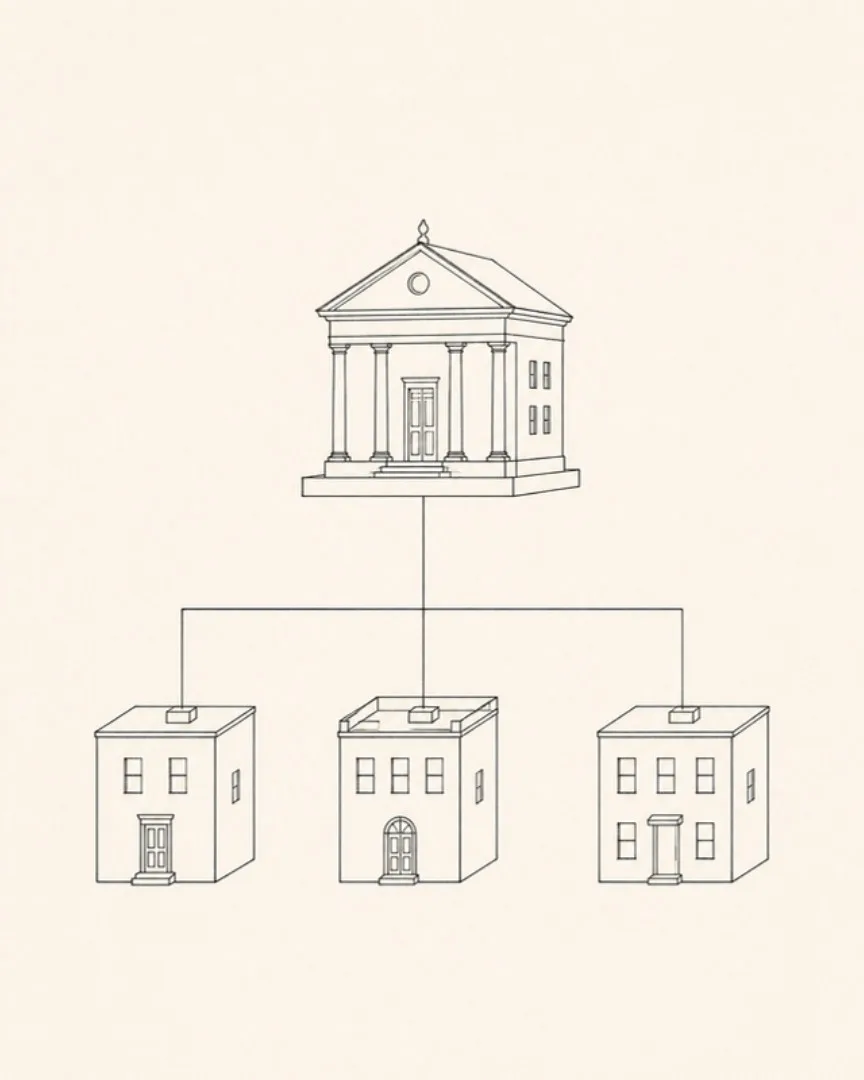
Four structures recur in transactions by Israelis abroad. Each has different consequences for registration, control, exit and tax.
| Structure | What is registered in your name | Advantage | What to watch |
|---|---|---|---|
| Direct co-ownership | A share of the property in the land registry, alongside the other investors | A registered property right, enforceable against everyone | Joint management, decisions that require everyone's consent, and each co-owner's right to ask for partition under local law |
| Dedicated local company (SPV) | Shares in the company; the property is registered in the company's name | Centralised management, sale by transfer of shares, simpler bank financing | Who manages the company, minority rights, the company's debts and beneficial-ownership reporting |
| Israeli company or partnership holding a local company | Shares or partnership interests in the Israeli entity | Documents in Hebrew and Israeli law governing relations between investors | Two layers of companies and reporting, and tax questions in both countries |
| Fund or collective investment structure | Units or participation rights | Spread over several properties and professional management | Such a structure may be subject to the Securities Law and other legislation, and the investor's influence on decisions is limited |
Direct co-ownership usually suits a small group of people who know each other. In Romania, for example, each co-owner may ask for partition at any time, unless it was agreed in a registered notarial agreement to suspend this for up to five years, as explained in the guide on co-ownership of property in Romania. A larger group usually moves to a dedicated company. In some countries the structure is also dictated by restrictions on foreigners: in Romania, a non-EU citizen does not hold land in their own name, so land is usually bought through a Romanian company.

What must a group purchase investors' agreement include?
The investors' agreement is the document that governs relations among the members of the group and with the organiser. It is no less important than the purchase contract, because most disputes in groups do not start with the seller but between the partners. These are the matters a good agreement covers:
- Parties and shares. Who the investors are, how much each invested, and how the shares are set if investment amounts change later.
- Management and decisions. What the manager or organiser may do alone, which decisions require a majority and which require everyone's consent. A sale, taking a loan, changing the building plan and contracting with a related party are usually reserved decisions.
- Capital calls. What happens when the project needs more money: who decides, within what time the money is transferred, and what happens to an investor who does not pay. Dilution, a loan from the other partners or a forced sale of their share are options that must be written in advance.
- Deadlock. A mechanism for deciding when there is no majority, for example an agreed tie-breaker, mediation and a defined exit procedure.
- Exit. When the property is sold, a right of first refusal for the partners, tag-along and drag-along rights, and what happens on an investor's death, divorce or bankruptcy.
- Information rights. Periodic reports, access to the project's bank statements, copies of permits and contracts, and the right to an external audit.
- Organiser's fees and conflicts of interest. How much the organiser receives, from you and from sellers or contractors, and whether the organiser or their relatives are a party to the project's transactions.
- Governing law and jurisdiction. Which law governs relations between the investors, and where disputes are heard.
When the property is held in a local company, decisions are in practice taken under the company's constitutional documents and local law. A Hebrew investors' agreement that contradicts the articles of the Romanian, Greek or Cypriot company will not always prevail over them against third parties. So the two documents are checked together, and you make sure your protective provisions also appear in the local documents.
For similar issues from the side of partners setting up a project together, see the guide on a founders' agreement in a real estate project abroad, and the guide on exiting through an asset sale versus a share sale.
Where does the group's money sit until registration?
This is the question that, more than any other, separates an orderly group from a risky one. Money that goes to the organiser's account, or to an account not named in the contract, leaves every protective mechanism. The money should go to an account defined in the contract and belonging to the seller, the notary, an escrow account or a dedicated project account, according to what the law of the country of the property allows.
- In whose name is the account, and in which country? An account in the name of the group's dedicated company is better than the organiser's account. An escrow account with a lawyer or notary is better than both, where it is available.
- Who is authorised to withdraw? Dual signature, for example by the manager and an investors' representative, reduces the risk.
- When is the money released? Release should preferably be tied to an event that can be verified: signing the deed, registration in the land registry, a building permit or a construction stage approved by an independent party.
- What happens if the deal does not go ahead? Who returns the money, within what time, and less which expenses.
The protection available varies from country to country. In Romania, for example, advance payments for an off-plan project go into a dedicated account from which the developer draws by stages, but there is no escrow in the Israeli sense, as explained in the guide on payment protection in Romania. In the USA the funds are usually held by an escrow agent.
What is registered in your name in the country of the property?
What is registered is what you have. In direct ownership, you ask for an up-to-date land registry extract after registration and check that your share appears in your name and at the agreed percentage. In a dedicated company, you check in the local companies register that you are registered as a shareholder, and what is registered against the company's property in the land registry. In both cases you do not rely on the organiser's confirmation.
Note also the gap between "a share in a property" and "a unit". An undivided share in a whole building is not an apartment, and it is hard to sell on its own. Anyone buying a specific unit within a group transaction should see it identified in the contract and on the plan, and know when it will be registered separately.
Who represents whom in a group purchase abroad?
A group purchase usually involves several professionals: the seller's lawyer, the lawyer the organiser appointed for the group, a notary and sometimes a local accountant. None of them represents you personally. The group's lawyer represents the group or the dedicated company, and its interests are not always identical to yours, for example on capital calls or the timing of the sale. The notary is neutral, as explained in the guide on who protects the buyer.
An investor putting in a significant amount asks a lawyer who represents only them to review the investors' agreement, the company documents and the purchase contract before the first transfer. This is not a sign of distrust towards the organiser, but a normal part of a transaction between different parties.
When is a group purchase abroad subject to the Israeli Securities Law?
When in substance it is an offer of securities to the public in Israel. Under section 15 of the Securities Law, 5728-1968, no offer to the public may be made except under a prospectus whose publication the Israel Securities Authority has permitted, even when the property itself is abroad. Shares in a dedicated company, partnership interests or an undertaking to repay a loan offered to many investors are usually securities.
The law lists cases that are not an offer to the public. Section 15A(a)(1) deals with an offer to a limited number of investors, and under regulation 2 of the Securities Regulations (Details for Sections 15A to 15C of the Law), 5760-2000, the maximum number is 35. The law adds to the count the offers made in the 12 months before the offer. In addition, an offer to investors of the types listed in the First Schedule to the law is not included in the count. The full rules, including the income and asset thresholds for a qualified investor, are explained in the guide raising money from Israelis for a project abroad and the Securities Law.
The Israel Securities Authority has addressed real estate ventures abroad explicitly. In a staff position from February 2022 it stated that even a transaction in which a unit is registered in the investor's name in the local land registry may be considered a security, when in substance it is a passive investment: a fixed return that does not depend on the unit's income, a lease-back to the developer, a buy-back at a pre-set price and a uniform price for all units. It added that brokers and marketers are not exempt from the law.
A group marketed through open advertising, an open seminar or a large WhatsApp group, and offering shares or a pre-set return, may be an offer to the public without a prospectus. That is the organiser's risk, but also yours: an investigation or proceedings in the middle of the project may delay it. Ask the organiser, in writing, which route in the law they rely on.
What must be reported to the Israel Tax Authority?
An Israeli resident is taxed in Israel on worldwide income, and taking part in a group purchase abroad is no exception. When the property is held directly, the rent is reported in Israel, and on a sale there is a duty to file a notice and pay an advance within 30 days. When it is held through a foreign company, other questions arise: whether the company is in fact managed from Israel and may therefore be treated as an Israeli company, and whether the controlled foreign company rules apply to it. In addition, transferring NIS 500,000 or more abroad within 12 months triggers a duty to file an annual return.
The details, including the reporting thresholds and the tracks for taxing rent, are gathered in the guide on the Israeli side of property abroad. It is worth choosing the holding structure with an accountant or tax adviser before joining, because changing it later costs more.
What are the red flags in a group purchase abroad?
- You are asked to transfer money to the organiser's account or to an account not named in the contract.
- There is no written investors' agreement, or it arrives only after the transfer.
- It is unclear what will be registered in your name, and when.
- The organiser receives a commission from the seller and does not disclose it.
- A "guaranteed" return without knowing who gives the undertaking and what stands behind it.
- There is no defined exit route, or exit depends only on the organiser's decision.
- One lawyer "represents everyone", including the seller.
- Time pressure: "two units left", "the price goes up on Sunday".
For a broader list see the red flags when buying property abroad and the 12 questions before investing through an investment company.
How do we assist an investor joining a group purchase?
We represent the investor, not the group and not the organiser. We review the investors' agreement, the documents of the dedicated company and the purchase contract, check the money trail and the registration, and mark what is missing before the transfer. We carry out the registry checks and the steps that local law requires together with lawyers and notaries licensed in the country of the property, and coordinate the tax side with your accountant in Israel.
This article is general information correct as of November 2026 and is not legal, tax or investment advice for any particular case. Securities law, the positions of the Israel Securities Authority and the law of the country of the property change. Before joining a group, it is worth obtaining individual advice.
Frequently asked questions
Is a group purchase abroad safe?
It depends on the structure, not the name. A group in which each investor's right is registered in the country of the property, the money sits in a protected account and there is a detailed investors' agreement protects investors far better than a group in which money is transferred to the organiser on the strength of a presentation. Check the documents before the first transfer.
What is the difference between a group purchase and an investors' club?
Neither term has a single legal definition. What matters is what you actually receive: a registered share in the property, shares in a company, partnership interests or a contractual right. Each is checked differently, and the Securities Law may apply to some of them.
How many investors can a group purchase have without a prospectus?
Under section 15A of the Israeli Securities Law and regulation 2 of the regulations made under it, an offer to up to 35 offerees, together with offers made in the previous 12 months, is not an offer to the public. Investors listed in the First Schedule are not counted. You count everyone who received an offer, not only those who invested.
What happens if another investor in the group does not pay their share?
It depends on the investors' agreement. A good agreement sets in advance a deadline for payment and what happens on default: dilution, a loan from the partners or a sale of their share. Without such a provision, the whole project may get stuck.
How do you exit a group purchase before the end of the project?
According to what the agreement says: transferring the share or the shares to a partner or a third party, subject to a right of first refusal and approvals. In direct co-ownership, the partition rules of the local country also apply. If the agreement does not set an exit route, exit depends on the others' consent.
Does the group purchase lawyer also represent me?
No. They represent the group or the dedicated company, and are sometimes appointed by the organiser. An investor who wants their own rights checked turns to a lawyer who represents only them.
 Read next · 10 min readBuying Off-Plan Abroad: Which Clauses to Demand in the Presale Contract and How to Protect Your MoneyBuying off-plan abroad: stage-linked payments, guarantees and escrow by country, delay compensation, specifications, assignment, insolvency, registration.Read the guide
Sources
- Securities Law, 5728-1968 (sections 1, 15, 15A and the First Schedule) - Hebrew Wikisource
- Israel Securities Authority - summary of findings on offers of securities to the public (February 2022)
- Israel Tax Authority - filing an annual return for individuals
- Israel Tax Authority - notice of sale of an asset (Form 1399)
- European e-Justice Portal - Land registers in EU countries
