






In brief
Checking a developer in Dubai starts with three questions that can be verified with the Dubai Land Department (DLD): is the developer listed in the developers register, is the project registered and approved, and does it have an Escrow account into which you will pay. Next, you check the actual completion rate against the payment schedule, the advertising permit and the broker, and the developer's track record on previous projects. Under Dubai law, an off-plan sale contract for a project that has not been approved and registered with the DLD is void, so the check must be done before any payment, even before a deposit.
Key takeaways
- 1A developer may not operate in Dubai without registration in the DLD developers register and a licence from the authorities (Article 4 of Law 8/2007).
- 2An off-plan sale of a project that has not been approved and registered with the DLD is void (Article 10 of Law 13/2008, Article 11 of Resolution 6/2010).
- 3Project status and completion rate can be checked on the DLD website or app by project name, project number or plot number.
- 4Any advertising of off-plan sales, even at an exhibition in Israel, requires the DLD's written approval (Article 5 of Law 8/2007), and an approved broker can be checked on the DLD website or in Dubai REST.
- 5A request to transfer money to an account other than the project's Escrow account is a major warning sign.
When you buy an off-plan apartment, the developer is the real asset you are buying in the first years: there is no apartment yet, only a company's undertaking to build it. Dubai has several official tools that allow you to check the developer and the project before the money leaves Israel, and the law itself defines what must be in place before you can be asked to pay. This guide sets out the checks in the right working order, explains what each check reveals and what it does not, and lists the warning signs. It does not rank developers and does not recommend any particular developer.
How do you check whether a developer in Dubai is registered and licensed?
You check that the developer appears in the developers register of the Dubai Land Department (DLD) and holds a valid licence. Dubai Law 8/2007 provides that a developer may not operate unless it is listed in the register and licensed by the competent authorities (Article 4). A developer that is not registered, or that has been struck off the register, cannot lawfully sell off-plan.
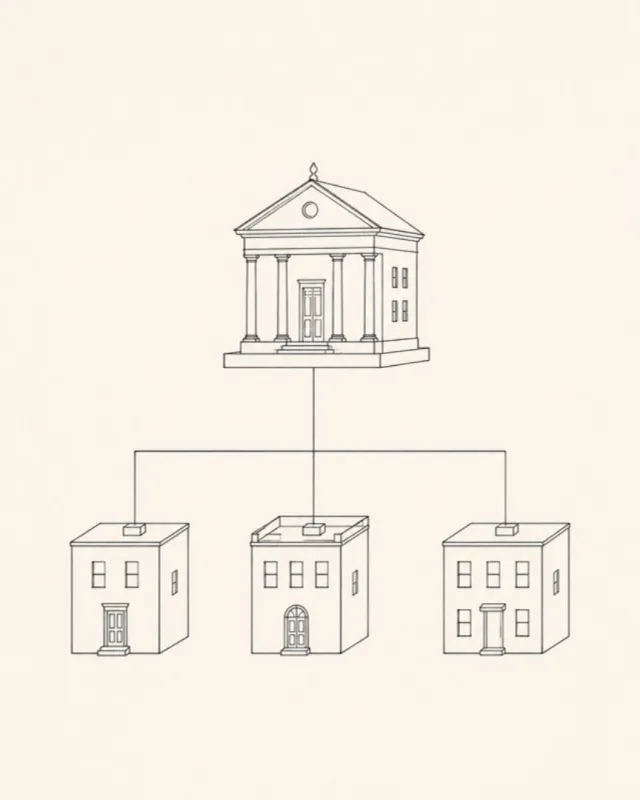
It is also important to check the exact legal entity. The sale contract is signed with a specific company, not with a trade name or brand. Sometimes a project is marketed under the name of a well-known group, but the contracting party is a special purpose project company or a sub-developer operating on land owned by a master developer. What matters is who signs, who is registered as the project's developer with the DLD, and in whose name the Escrow account is held. An application to open an Escrow account includes, among other things, the developer's trade licence and the contract between the master developer and the sub-developer, if there is one (Article 6 of Law 8/2007).
How do you check that the project itself is registered and approved?
According to the DLD, project status and completion rate can be checked on the department's website or app, by plot number, project number or project name. This check matters because Dubai law sets preconditions for sale:
- A developer may not start a project or sell units off-plan before it has received possession of the land and the required approvals from the authorities (Article 4 of Law 13/2008; Article 4 of Resolution 6/2010).
- An off-plan sale contract for a project that has not received the approvals is void (Article 10 of Law 13/2008).
- Any off-plan transaction made before the project is approved and registered with the DLD is void (Article 11 of Resolution 6/2010).
- The DLD records a note on the land that it is a project under development, and removes it on completion or cancellation (Article 5 of Resolution 6/2010).
The practical meaning: if you are asked to pay for a project that cannot be found with the DLD, you are paying for something the law does not yet recognise. This is particularly relevant at the reservation agreement and deposit stage. For more on this risk, see the guide on a deposit without an SPA.

What do you check in the project's Escrow account?
Every off-plan project must have a separate Escrow account, and the funds in it are intended solely for the construction of that project (Article 9 of Law 8/2007). Check that the account details in the contract and in the payment demand (bank, account holder's name and number) belong to this project, and that no payment is directed to another account. The regulations also require brokers to deposit sale proceeds into the project's Escrow account and not into their own account, and prohibit them from deducting commission in advance (Article 12 of Resolution 6/2010). A full explanation of the mechanism is in the guide to the Escrow account under Law 8/2007.
How do you know whether construction is really progressing?
Compare the completion rate recorded with the DLD to the payment schedule in the contract. If the payment schedule already requires a large part of the price when construction has barely begun, this is not necessarily improper, but it means that a large part of your money goes out before there is construction to back it.
- Official figure: the completion rate is determined according to a technical report by a RERA-approved consultant, after a site visit (Article 17 of Resolution 6/2010). According to the DLD, RERA asks developers to update the expected completion dates from time to time, and a technical report is considered expired three months after the last report.
- Consultant's letter: according to the DLD, a buyer may request a letter from a DLD-approved project consultant confirming the completion rate before a milestone-linked payment.
- Independent report: according to the DLD, a technical report can be ordered through RERA for an advance payment of approximately AED 15,000, after which the survey department visits the project.
- Stalled project: according to the DLD, where a project's completion rate is 5% or less, RERA contacts the developer and sets a deadline for rectification, and if the developer fails to meet it, cancellation proceedings begin.
How do you check the developer's track record?
The DLD has no official public rating of developers, so you check the facts that can be verified. Ask which projects the developer has completed, and check their status with the DLD. Check whether any projects were cancelled or stalled for long periods. The regulations list grounds for cancellation of a project by RERA, including failure to start construction without justification, breaches of the Escrow law, lack of genuine intention to carry out the project, gross negligence and the developer's bankruptcy (Article 23 of Resolution 6/2010). A developer may be struck off the register, for example, where it has not started construction 6 months after approval of the off-plan sale (Article 17 of Law 8/2007).
Another source is court judgments. The Dubai courts publish some of their decisions, and press reports sometimes describe claims by buyers against developers. A single claim does not say much, but a recurring pattern of claims over delays or refunds is important information. Such a check is usually done in Arabic and requires a local lawyer.
Are the marketer and the advertising licensed?
Law 8/2007 requires the DLD's written approval for any advertising or exhibition of off-plan sales, in Dubai or abroad (Article 5). The meaning for an Israeli buyer: an exhibition or campaign in Israel should also be approved. All real estate advertising in Dubai requires a DLD Trakheesi permit, and the permit number should appear in the advertisement. According to the DLD, an approved broker can be checked on the DLD website or in the Dubai REST app, and the regulations provide that a broker may market a project only if the project is registered with the DLD, the broker is licensed, and the marketing agreement itself is registered (Article 10 of Resolution 6/2010). On the division of roles between marketer, broker and lawyer, see the guide on marketer versus lawyer.
Checklist: 10 steps before paying a developer in Dubai
- Identify the legal entity that will sign the contract, not just the brand name.
- Verify that the developer is listed in the DLD developers register and that its licence is valid.
- Find the project with the DLD by name, project number or plot number, and verify that it is registered and approved.
- Check the recorded completion rate and the expected completion date, and compare them to the payment schedule.
- Verify that the Escrow account details in the contract belong to this project.
- Check the broker's licence and the advertisement's advertising permit (Trakheesi).
- Request the full sale and purchase agreement (SPA) before any payment, including the specification and unit plan annexes.
- Check the developer's previous projects and their status with the DLD.
- Ask for a written answer to material questions: completion date, extension period, estimated service charges, transfer and assignment fees.
- Prepare the source-of-funds documents in Israel before committing to a payment date.
| Warning sign | Why it is a concern | What to do |
|---|---|---|
| A request to transfer to a personal account or to a company that is not the Trustee | The money does not go into the Escrow account and does not enjoy the protection of Law 8/2007 | Stop, request the Escrow account details in writing and verify them with the DLD |
| The project does not appear with the DLD | A contract for a project that has not been approved and registered is void | Do not pay until the project is registered |
| Pressure to pay a deposit before seeing a contract | There is no document defining your rights | Demand the full SPA before paying |
| A promise of a return or guaranteed profit | Such a promise is not part of the statutory protections and is sometimes not anchored in the contract | Check who undertakes it, to what, and in which document |
| A large gap between the completion rate and the money already demanded | A large part of the price goes out before there is construction | Consider a different payment schedule or request a consultant's confirmation before each stage |
On return promises, see also the guide to guaranteed return clauses abroad, and for the overall map of off-plan risks see the Dubai off-plan risk map.
Before you sign: how we assist
We start with these checks before the client pays, even before a deposit: registration of the developer and the project, the Escrow account, the completion rate against the payment schedule, and the contract itself. Checks with the authorities and registers in Dubai, and checks of claims in Arabic, are carried out in coordination with licensed local lawyers. We handle the Israeli side, including the source of funds and their transfer, from here.
The information in this article is general and correct as of November 2026, and is not legal advice for any specific transaction. It does not rank developers and does not recommend any developer. The DLD's verification tools and procedures change, so the current position should be checked before any decision.
Frequently asked questions
How do you know whether a developer in Dubai is reliable?
There is no single test. You check that it is listed in the DLD developers register, that the project is registered and approved, that the project has an Escrow account, that the completion rate matches the payment schedule, and what the status of its previous projects is. Reliability is built on facts that can be verified, not on marketing promises.
Where do you check the status of an off-plan project in Dubai?
According to the DLD, on the Land Department's website or app, by plot number, project number or project name. The check shows the project's status and completion rate. Pay attention to the date of the latest report.
Is a contract for a project not registered with the DLD valid?
Under Article 10 of Law 13/2008, an off-plan sale contract for a project that has not received the required approvals is void, and under Article 11 of Resolution 6/2010 a transaction made before the project was approved and registered with the DLD is void. In such a situation the main concern is the ability to recover the money.
May a developer market a Dubai project at an exhibition in Israel?
Law 8/2007 requires the DLD's written approval for advertising or exhibiting off-plan sales, in Dubai or abroad. You can, and should, ask to see the approval. Whether the marketing also complies with the requirements of Israeli law is a separate question.
How much does an independent technical report on a Dubai project cost?
According to the DLD, a technical report on the completion rate through RERA costs approximately AED 15,000, paid in advance. After payment, the survey department visits the project. In most cases the online status check is sufficient, and the report is appropriate where there is a real doubt.
What is the difference between a master developer and a sub-developer, and why does it matter to me?
A master developer develops an entire area and allocates plots, and a sub-developer builds a project on such a plot. Your contract is usually signed with the developer of the project itself, so that is the party that needs to be checked. A change at the master developer that affects the sub-developer is recognised in the regulations as a cause beyond the developer's control, and this may affect delays.
What do I do if I am asked to transfer money to a different account?
Stop. Request the project's Escrow account details in writing and verify them with the DLD. A payment to an account other than the Escrow account does not enjoy the protection of Law 8/2007, and the regulations also prohibit brokers from receiving the money into their own account.
 Read next · 13 min readMy Dubai Apartment Differs from the Specification: Your Rights When the Area, View or Finishes Do Not MatchDubai unit differs from the spec: when a shortfall over 5% is compensated, what to do about finishes or view, how to document before handover, and your options.Read the guide
Sources
- Dubai Legislation Portal - Law No. (8) of 2007 Concerning Escrow Accounts for Real Estate Development
- Dubai Legislation Portal - Law No. (13) of 2008 Regulating the Interim Real Property Register
- Dubai Legislation Portal - Executive Council Resolution No. (6) of 2010
- Dubai Land Department - Frequently Asked Questions
- Dubai Media Office - DLD fines real estate companies for not adhering to advertising requirements (Trakheesi)
