







In brief
The Bulgarian Constitution and the Property Act allow a foreigner who is not a citizen or resident of the European Union to acquire ownership of buildings and apartments, but not ownership of land, except by virtue of an international treaty or by inheritance under the law. An Israeli can therefore register an apartment in a building in his own name, but a private house with a plot, a building plot or land for development is usually acquired through a Bulgarian company that he owns, most often an EOOD (a limited liability company with a single shareholder). Such a company is considered a Bulgarian entity for all purposes, but it requires ongoing management and tax planning on the Israeli side as well.
Key takeaways
- 1An apartment in a condominium building: an Israeli may buy in his own private name, with no need for a company.
- 2Land (including the plot under a private house): direct ownership by a non-EU foreigner is prohibited, except by inheritance under the law or by treaty.
- 3A wholly Israeli-owned EOOD is considered a Bulgarian company and can acquire urban land, but not agricultural land or forest.
- 4The company is a separate entity: bookkeeping, annual financial statements, 10% corporate tax and tax on the distribution of dividends.
- 5On the Israeli side, the place of control and management, the controlled foreign company rules and the taxation of the dividend should be examined in advance.
Can an Israeli buy land in Bulgaria?
Not in his own private name. Article 22 of the Bulgarian Constitution and Article 29 of the Property Act provide that foreigners and foreign entities may acquire ownership of land only under conditions set in an international treaty, whereas individual foreigners may also acquire land by inheritance under the law. Citizens and residents of the European Union and the European Economic Area (EEA) enjoy a separate arrangement derived from Bulgaria's Accession Treaty to the Union, and therefore they acquire land like locals.
Israel is not part of the Union, and we have not identified a treaty between Israel and Bulgaria granting Israeli citizens the right to acquire land. The practical meaning: an Israeli investor who buys in his personal name can own a building, but not the land on which it stands. It is important to emphasize that the test is citizenship and residence. An Israeli who also holds a passport of a European Union member state, for example Romania, Poland or Portugal, and buys using the European passport, is examined as an EU citizen. This is a point worth examining already at the stage of planning the transaction.
Land (including the plot under a private house): direct ownership by a non-EU foreigner is prohibited, except by inheritance under the law or by treaty.
What may a foreigner buy in Bulgaria?
According to Article 29 of the Property Act, foreigners may acquire ownership of buildings, as well as limited property rights in real estate, so long as the law does not provide otherwise. In practice, the list is wider than many think:
- An apartment or a unit in a building - full ownership of the unit and of the common parts of the building.
- A freestanding structure - a house, a storeroom or a commercial building, separate from the land.
- A building right (право на строеж) - a proprietary right to erect a building on another's land and to be the owner of the building. This is the right through which units in buildings under construction are sometimes acquired.
- A right of use (узуфрукт) - a right to hold and use another's property. It is personal, does not pass by inheritance and ends on the death of its holder, and therefore it is usually not suitable as a basis for an investment.
- Easements - for example, a right of way.
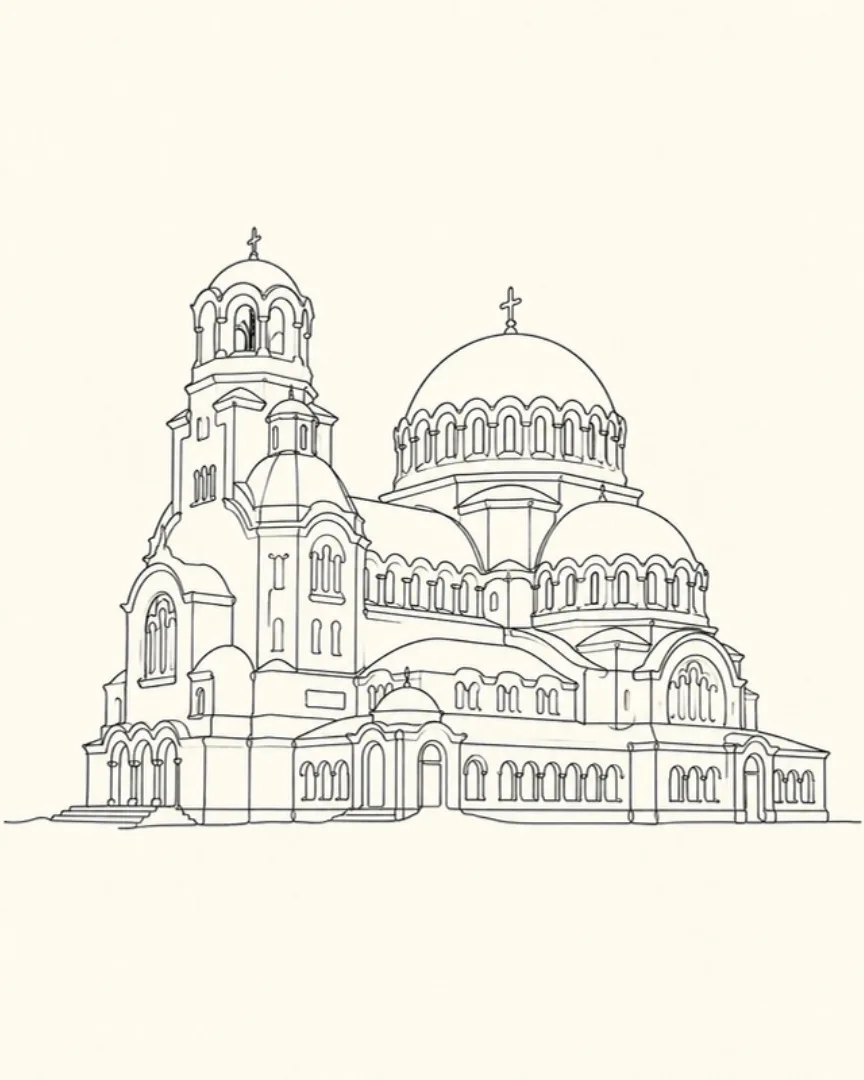
Why is an apartment in a condominium building not a problem?
Because what is acquired is the unit itself. Under the Bulgarian condominium regime, ownership of an apartment includes a proportional share in the common parts of the building, and the link to the land is arranged in a way that does not require the foreign buyer to be the registered owner of the plot. This is why Israelis buy apartments in Sofia, Varna or on the Black Sea coast directly in their own names, without a company and without a limit on the number of apartments.
Nevertheless, the wording of the notarial deed of sale matters. When the buyer is a foreigner, the notary and the local lawyer draft the description of the rights accordingly, and you must make sure the deed accurately describes the unit, the common parts and the accompanying rights. When buying from a developer at the construction stage, the arrangement is sometimes made through a building right to the unit, so the wording of the documents determines exactly what you received and when.
Where it gets complicated: a private house, a villa or a plot
When the property is a house with a yard, a villa in a complex or a building plot, the land is an essential part of the transaction, and therefore a non-EU foreigner cannot register it in his name. Before deciding, it is worth getting to know the three main alternatives:
| Alternative | What you actually get | Advantages | Disadvantages and risks |
|---|---|---|---|
| Personal purchase of the building only, with a building right or a right of use in the land | Ownership of the building; the land remains owned by someone else | No company and no bookkeeping | Dependence on the landowner; a right of use does not pass by inheritance; difficulty in sale and bank financing |
| A Bulgarian company (EOOD or OOD) owned by the investor | The company's full ownership of the building and the land | Effective full ownership; flexibility in development and sale, including a sale of shares | Ongoing management costs; reporting in Bulgaria and Israel; tax planning required |
| Purchase through a family member who is an EU citizen | Direct ownership in the name of the EU citizen | Registration simplicity | Legal ownership is not the investor's; inheritance, divorce and creditor risks; requires a carefully drafted trust agreement |
In most cases where the land is the heart of the transaction, and particularly in development projects, the accepted and safe alternative is a Bulgarian company. The first alternative suits mainly when the land is marginal and there is trust and stability toward its owner. The third alternative looks simple, but shifts the risk from Bulgarian law to personal relationships, and therefore we recommend it only after a full legal and tax examination.
What is an EOOD, and why is it the accepted solution?
An EOOD (ЕООД) is a limited liability company with a single shareholder, and the OOD (ООД) version is one with two or more partners. A company domiciled in Bulgaria is considered a Bulgarian legal entity even if its entire share capital is held by foreigners, and therefore it may acquire urban land like any local company. At the same time, the investor's holding is in the company's rights, which are not subject to restriction.
The minimum required capital is symbolic. With Bulgaria's entry into the eurozone on 1 January 2026, the capital of existing companies was converted from leva to euros at the fixed rate of 1.95583, and companies were given a year to update their constitutive documents accordingly. The company is registered in the Commercial Register of the Registry Agency, and must have a registered address in Bulgaria, a manager (управител) who may also be a foreigner, and a local bank account. Reporting on the ultimate beneficial owners (UBO) is also required.
When two or more investors buy together, an OOD with a detailed founders' agreement (a majority for decisions, rights of first refusal, an exit mechanism) is preferable to registration in the name of one of them and an Israeli "side agreement" that is not registered in Bulgaria.
What can an Israeli-owned company not acquire?
Agricultural land and forest. The Ownership and Use of Agricultural Land Act restricts the acquisition of agricultural land by companies whose owners are citizens of countries with which there is no suitable treaty, and sets a requirement of five years of residence or incorporation in Bulgaria. This means that an EOOD just established by an Israeli is not suitable for acquiring agricultural land, even if it is qualified to acquire a regulated urban plot.
This point is critical in "land on the edge of town" transactions or in holiday villages, where the land's designation is still agricultural and a change of designation is planned. Before signing, you must verify the land's classification and the planning position, and not rely on the broker's description.
And what happens on inheritance?
A foreigner may inherit land in Bulgaria by inheritance under the law. As for agricultural land and forest, the law provides that a foreigner who inherited and does not meet the conditions for acquisition must transfer the ownership within three years of the opening of the estate. Inheritance under a will is not the same as inheritance under the law, so investors who plan an intergenerational transfer need to examine the structure in advance. Holding through a company simplifies this, since the heirs inherit the company's rights and not the land itself.
How much does it cost to hold a company in Bulgaria, and what are the ongoing obligations?
The government incorporation fees are low, and the main cost is professional fees and ongoing bookkeeping. The main obligations:
- Bookkeeping by a Bulgarian accountant, and publication of annual financial statements in the Commercial Register.
- Corporate tax at a flat rate of 10% on profit (as of October 2026), including profit from the sale of the property.
- Tax on the distribution of dividends to a foreign shareholder, collected by withholding at source.
- VAT - the sale of a new building by a company may be subject to VAT at a rate of 20%, and VAT registration should be examined.
- Local taxes - property tax and a refuse collection fee to the municipality, as for any property owner.
What is the significance in Israel of an Israeli-owned Bulgarian company?
The company may be Bulgarian, but its owner is an Israeli resident, and therefore three questions must be examined before incorporation:
- The place of control and management. If all decisions are in practice made in Israel, the Israel Tax Authority may argue that the company is an Israeli resident for tax purposes. It is worth documenting genuine management in Bulgaria and examining the treaty tests.
- Controlled foreign company. Bulgarian corporate tax is low, and income from rent is usually passive income. Such a combination may trigger the "controlled foreign company" rules in the Income Tax Ordinance and impose tax in Israel on undistributed profits (a "deemed dividend").
- Taxation of the dividend and reporting. The treaty between Israel and Bulgaria, signed in Jerusalem on 18 January 2000, provides that Israel grants a credit for the Bulgarian tax. A distribution of profits is taxable in Israel under the Ordinance, net of the credit, and holding a foreign company requires reporting in the annual return.
The answers to these questions sometimes determine whether the company structure is more or less worthwhile than direct purchase, and therefore early planning with an Israeli tax adviser is part of the transaction and not a stage that follows it.
What does the process look like: from decision to registering the land in the company's name
- Check the land's classification, planning and designation, and clarify whether purchase through a company is possible at all.
- Plan the structure: EOOD or OOD, founders' agreement, and examination of the implications in Israel.
- Incorporate the company: constitutive documents, a power of attorney certified by apostille and translated into Bulgarian if the investor does not attend, opening a bank account and depositing the capital, and registration in the Commercial Register.
- Due diligence on the property and the seller, and signing a preliminary agreement in the company's name.
- Signing a notarial deed of sale in the company's name and registering it in the Property Register on the same day.
- Registration of the company with the local tax authorities and arranging ongoing bookkeeping.
What to do before signing, and how we accompany you
Before any transaction that includes land in Bulgaria, the first decision is not "which property" but "who will be the owner". We examine the land's classification, build the appropriate holding structure, incorporate and manage the Bulgarian company together with local lawyers and accountants with whom we have worked for many years, and coordinate the Israeli aspects with your tax adviser, so that the structure chosen on the day of purchase will also suit rental, financing and a future sale.
The contents of this article are general information and do not constitute legal advice, tax advice or an investment recommendation, and should not be relied upon for a specific case. The law, tax rates and tariffs in Bulgaria and in Israel change from time to time, and personal circumstances may change the outcome. Before any decision or signature, obtain advice tailored to your case.
Frequently asked questions
Can an Israeli buy an apartment in Bulgaria in his own name?
Yes. Article 29 of the Bulgarian Property Act allows foreigners to acquire ownership of buildings and apartments. The restriction applies to land only, so an apartment in a condominium building is registered in the Israeli buyer's name with no need for a company.
Is it necessary to set up a company in order to buy a private house in Bulgaria?
If you want ownership of the plot as well, then in most cases yes. A non-EU foreigner can acquire in his own name only the building, with a building right or a right of use in the land, but this alternative leaves the land owned by someone else. A Bulgarian company owned by the investor allows full ownership.
Can an Israeli-owned Bulgarian company buy agricultural land?
As a rule, no. Bulgarian agricultural land law restricts acquisition by companies whose owners are citizens of countries with which there is no suitable treaty, and sets a requirement of five years' seniority. The land's classification must be checked before any commitment.
What is the difference between an EOOD and an OOD?
Both are limited liability companies under Bulgarian law. An EOOD is a company with a single shareholder, and an OOD is a company with two or more partners. When there are several investors, an OOD with a detailed founders' agreement is usually the right choice.
Does holding through a Bulgarian company save tax?
Not necessarily. Corporate tax in Bulgaria is low, but there is tax on the distribution of dividends, tax in Israel on the dividend net of a credit, and the "controlled foreign company" rules may apply. The calculation depends on the purpose of the investment and the holding horizon, and should be carried out in advance.
 Read next · 10 min readReal Estate Development in Sofia: Planning and Construction, Permits and Legal Considerations for a ProjectAn Israeli developer in Sofia: holding land when a non-EU foreigner cannot buy it, the permit route to a use permit, contracts, off-plan sales and exit tax.Read the guide
Sources
- ELRA - Bulgaria: Limitations to Foreigners (Constitution Art. 22, Property Act Art. 29, Agricultural Land Act Art. 3)
- CMS Expert Guide to Commercial Real Estate - Bulgaria
- DPC - Acquiring property in Bulgaria after Brexit
- KPMG Bulgaria - Currency conversion of share capital (2026)
- Registry Agency of Bulgaria - Registers
- Bulgaria - Israel Double Tax Treaty (text summary)
The information in this guide is general in nature and does not constitute legal or tax advice on any specific transaction. Every transaction is assessed on its own facts.