






One evening at the Opera
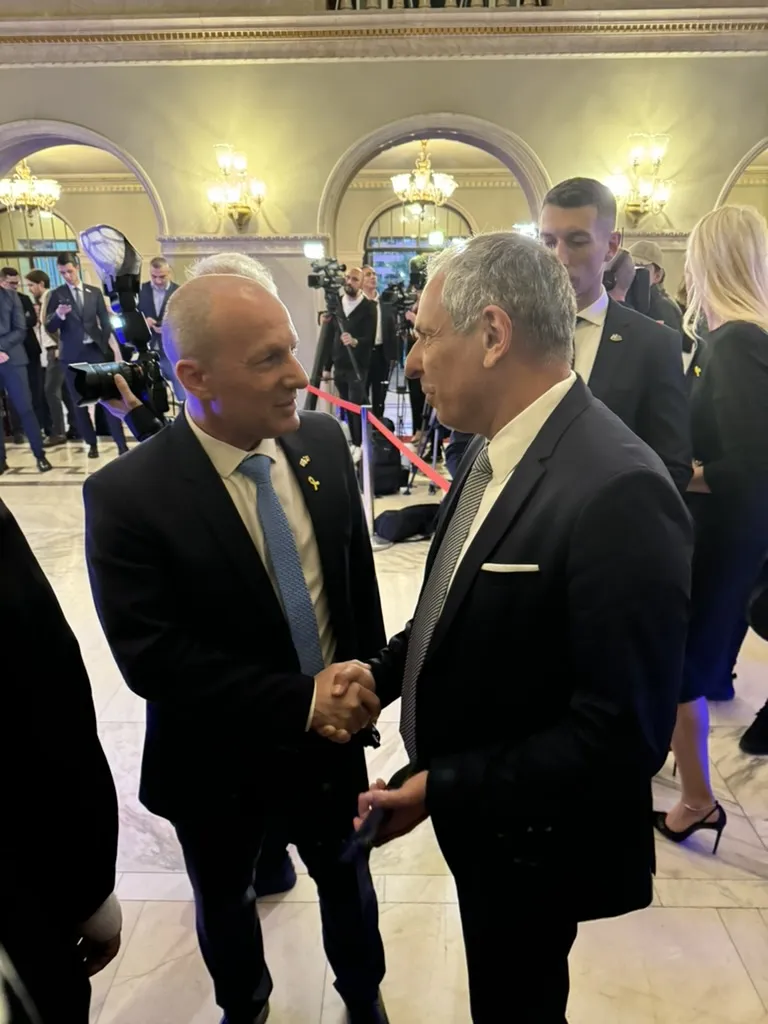
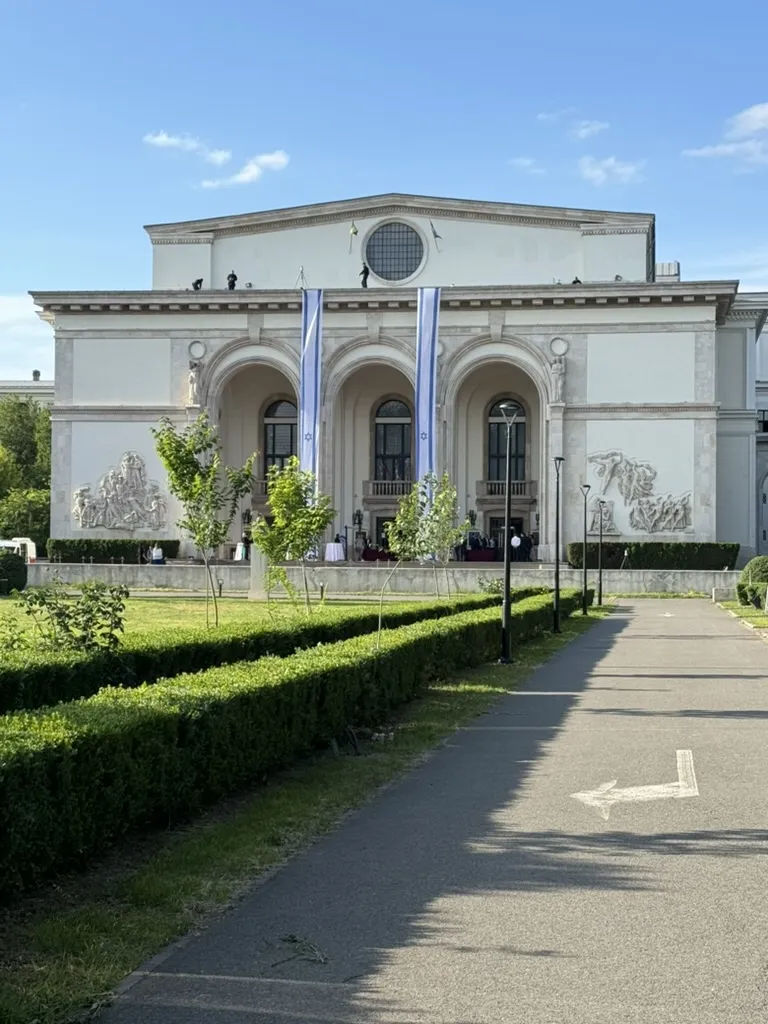
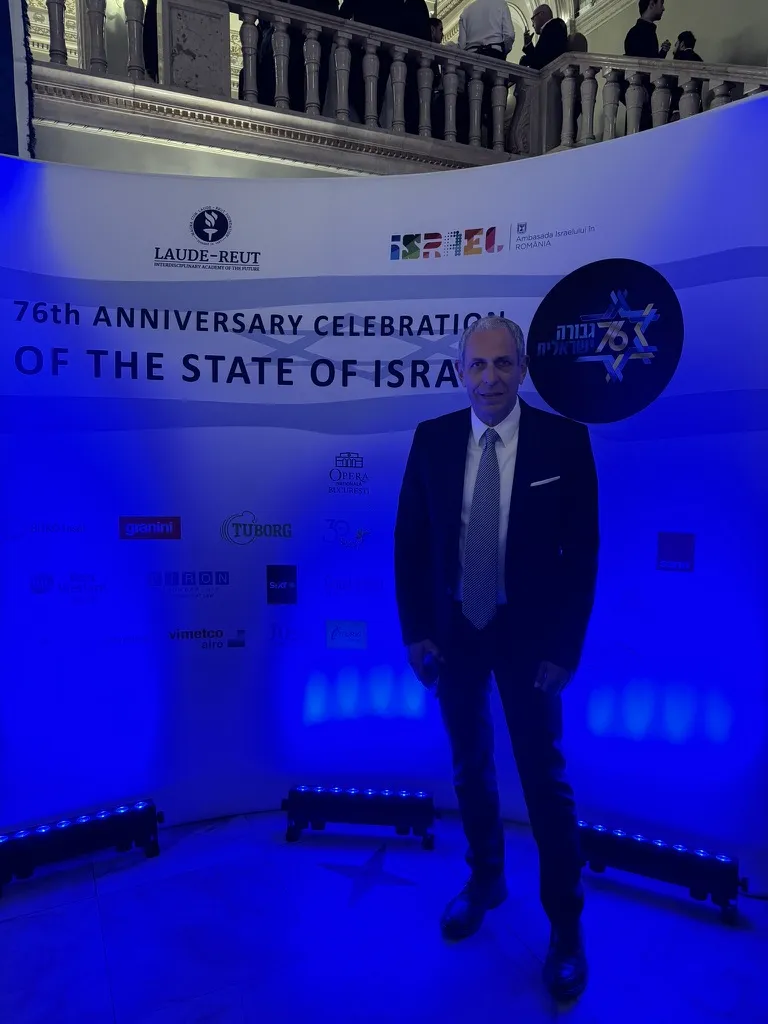
The Embassy of Israel in Romania held its official celebration of 76 years of statehood at the National Opera in Bucharest. Two long Israeli flags hung on the façade, and on stage the Romanian greeting „La mulți ani Israel 76”, "Happy birthday, Israel, at 76", appeared beside the flags of both countries. The theme of the evening was "Israeli heroism".
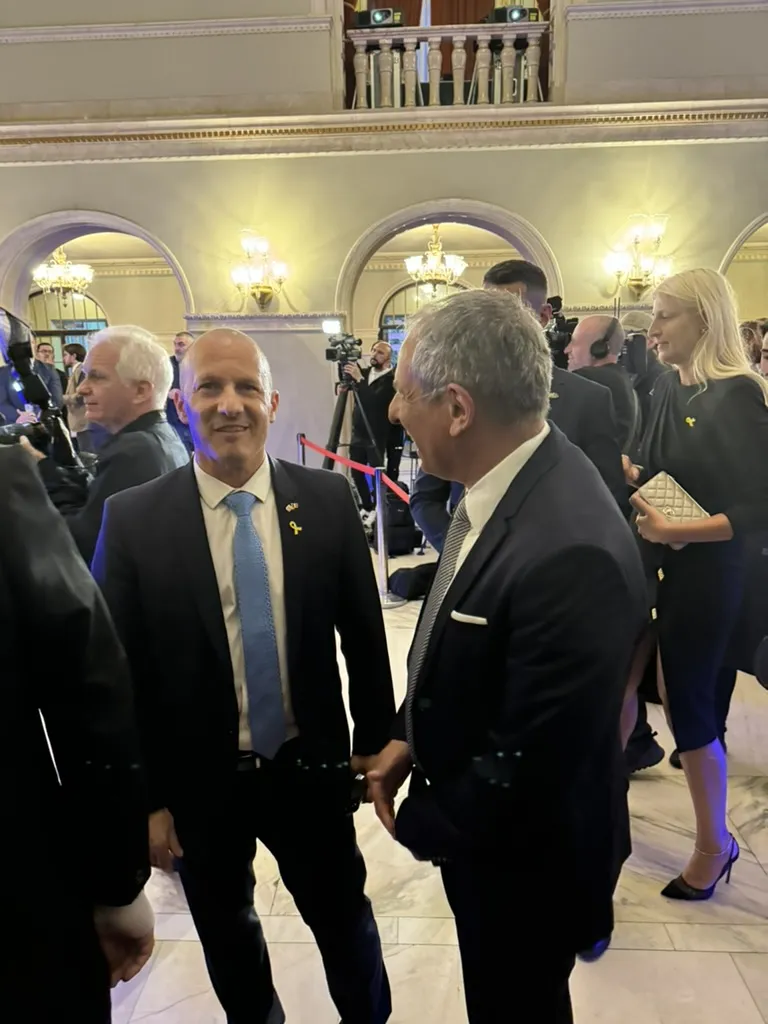
At the centre of the programme was the student choir of the Laude-Reut school in Bucharest, in white shirts and holding small Israeli flags, together with an orchestral ensemble. This year was different from the ones before: many guests, the ambassador among them, wore a yellow pin on their lapel, the symbol of the call to bring the hostages home.

For Ambassador Reuven Azar it was more than a ceremonial appearance. According to the Romanian report, he said that evening that after 7 October Israel discovered who its true friends are, and that public support for Israel in Romania keeps growing. To understand why that sentence sounds natural precisely in Bucharest, you have to go back 76 years.
1948: recognition from the first month
Romania recognised the State of Israel shortly after its founding, and diplomatic relations were established on 11 June 1948. Romania was already a communist state heading into the Soviet bloc, but its relationship with Israel was complicated from the start. The main reason lay within its own borders: one of the largest Jewish communities left in Europe after the Holocaust.
The aliyah: some 400,000 people
Between 1948 and the fall of the communist regime in 1989, by common estimates, between about 380,000 and 400,000 Jews emigrated from Romania to Israel. It is one of the largest immigrant groups in the country's history. In the first years tens of thousands left in a single wave; afterwards the gates opened and closed by turns, as the regime's needs dictated.
From the 1960s to the 1980s emigration became a quiet deal between the two states. Israel paid the Romanian regime for every exit visa, in cash and in goods. The story came out in full only after the 1989 revolution, and was documented, among others, by historian Radu Ioanid in "The Ransom of the Jews". The per-person sums cited by different sources vary, but the principle is clear: Israel bought freedom for its future citizens, and Romania received hard currency.
The result is still felt today. Hundreds of thousands of Israelis are immigrants from Romania, or their children and grandchildren. Romanian is heard on the streets of Haifa, Beersheba and Ashkelon, and the family bond with the "old country" was never broken.
When Moscow cut ties with Israel in 1967 and the rest of the bloc followed, Romania stayed.
1967: the country that stayed
After the Six-Day War the Soviet Union severed relations with Israel, and Bulgaria, Czechoslovakia, Hungary and Poland followed. Romania was the only country in the Soviet bloc that kept full diplomatic relations with Israel.
The decision was not driven by sympathy alone. Nicolae Ceaușescu was building a foreign policy independent of Moscow, and Israel was one way to show it. But the effect on the ground was real: in 1969 relations were raised to embassy level, and Israel kept a working embassy in at least one communist capital throughout the years of rupture with the rest of Eastern Europe.
1977: the Bucharest channel
These unusual relations made Bucharest a point of contact between Israel and the Arab world. Prime Minister Menachem Begin visited Romania in August 1977, and Ceaușescu was one of the channels through which messages passed between Jerusalem and Cairo, a few months before Egyptian President Anwar Sadat's historic visit to Jerusalem in November of that year.
After 1989: from the bloc to the West
The fall of the communist regime in December 1989 opened a new chapter. Romania joined NATO in 2004 and the European Union in 2007, and relations with Israel moved from Cold War diplomacy to a partnership of trade, security, tourism and people. Direct flights now link Tel Aviv with Bucharest and other cities, and many descendants of immigrants from Romania have regained Romanian citizenship, and with it a European Union passport.
That shift also built an economic bridge. Israeli investors and developers today know the Romanian market closely, some through language and family, some through deals. Adv. Ilan Leibovitch, whose mother tongue is Romanian, began his work in real estate abroad in Romania in 2007, the year Romania joined the European Union.
Timeline
- 11 June 1948Romania and Israel establish diplomatic relations.
- 1948-1989Some 380,000 to 400,000 Jews emigrate from Romania to Israel.
- June 1967After the Six-Day War, Romania is the only Soviet-bloc country that does not cut ties with Israel.
- 1969Relations are raised to embassy level.
- 1977Menachem Begin visits Romania. Bucharest serves as one of the channels on the way to Sadat's visit to Jerusalem.
- December 1989The communist regime falls.
- 2004 · 2007Romania joins NATO and the European Union.
- 2024Israel's 76th Independence Day at the National Opera in Bucharest.
Seventy-six years on, the story of Israel and Romania is above all a story of people: those who left, those who stayed, and those who return to Bucharest today to build, invest and celebrate. For one evening at the Opera, under two flags, all of those layers stood in the same hall.
Sources
- Embassy of Israel in Romania: Bilateral relations
- Library of Congress Country Studies: Romania, Middle East
- Hamichlol: Israel-Romania relations
- Jewish emigration from Romania
- Wilson Center: Radu Ioanid, The Ransom of the Jews
- FRUS 1977-1980, Vol. XX: Editorial Note
- Financial Intelligence: Ambassador Reuven Azar at the National Opera
This article is for general information only and is not legal advice. The historical data is based on the sources listed. Estimates of the number of immigrants vary between sources.