






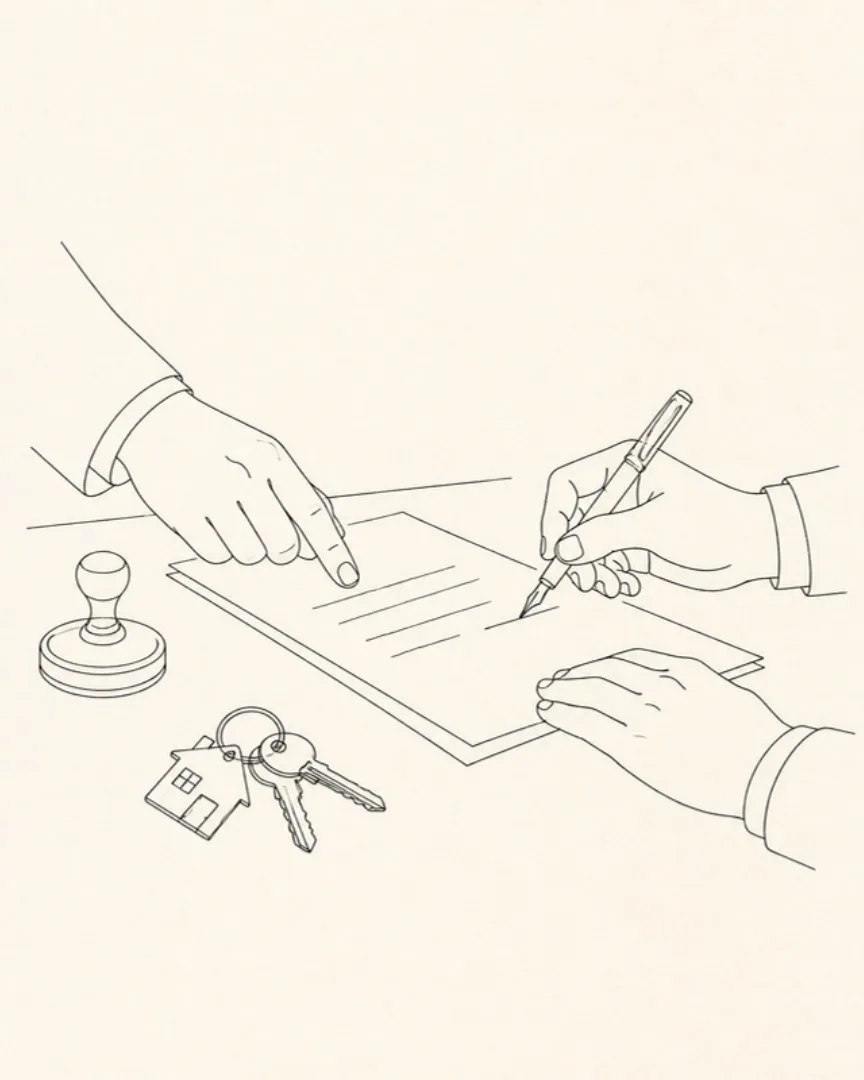
In brief
The ability to sell a property in Romania in the future is largely determined on the day of purchase: what exactly is registered in your name in the land book, and how. An Israeli without a European passport holds the house in his or her own name and the land through a right of superficies, which can be sold and mortgaged together with the house. On a sale, 3% or 1% of the transaction value is paid in Romania, and in Israel the sale is reported within 30 days and tax is paid on the gain less a credit.
Key takeaways
- 1No one can guarantee a price or a buyer. What can be verified in advance is that the right you buy is registered and can be sold.
- 2An Israeli without a European passport does not register land in his or her name; the house is registered in his or her name and the land under a right of superficies, for up to 99 years and renewable (Article 694 of the Civil Code).
- 3Under Article 695, the superficies can be sold and mortgaged together with the house - important, because the next buyer will probably take a mortgage.
- 4In Romania: 3% of the transaction value up to three years of ownership, 1% after that, and the tax applies even on a sale at a loss.
- 5In Israel: Form 1399 within 30 days, and generally 25% on the real gain, with a credit for the Romanian tax.
The question “how do we get out of this?” usually comes up with investors at the end of the meeting, almost quietly. It is an entirely legitimate question. Real estate is not a current account, and a property in a distant country raises a natural concern: what if I need the money, and who will even buy from me? This guide does not predict prices. It explains what must be true on the day of purchase so that on the day of sale you have a clean right to sell.
What exactly will you sell when you exit the property?
You will sell what is registered in your name in the land book (Cartea Funciară), no more. The answer therefore depends on the purchase structure.
| Purchase structure | What is registered | What is sold on exit |
|---|---|---|
| A European Union citizen | The house and the land in his or her name | Full ownership of the house and the land |
| An Israeli without a European passport, in his or her personal name | The house in his or her name, and the land under a right of superficies (Superficie, a right to maintain a construction on land belonging to another) | The house together with the right of superficies |
| A Romanian company (SRL) | Everything in the name of the company, even when all the shares are held by a foreigner | The property, or the shares of the company |
The restriction on land derives from Article 44(2) of the Constitution of Romania and from Article 6 of Law 312/2005. Which structure suits you is a personal decision, best made with a lawyer who represents you.
An Israeli without a European passport does not register land in his or her name; the house is registered in his or her name and the land under a right of superficies, for up to 99 years and renewable (Article 694 of the Civil Code).
Can a right of superficies be sold?
Yes. Under the Romanian Civil Code, the right of superficies is granted for a period of up to 99 years and can be renewed (Article 694). As long as the house exists, the right can be transferred and mortgaged together with the house (Article 695). The practical meaning: the next buyer will be able to obtain a mortgage, because the bank has registered security.
In whose name is the land under the house registered? For how many years will the superficies be registered, and what is the renewal clause? And what exactly will the next buyer receive? A good answer comes with a land book extract and a clause in the contract. A right in land registered in the name of a third party, such as a broker or an acquaintance, may effectively turn that party into a partner in the future sale.

And what if the property is held through a company?
Then there are two exit routes: a sale of the property by the company, or a sale of the company's shares. The taxation differs: there is tax at company level, and then dividend tax when the money is taken out to the owners. The effective rate also depends on the tax treaty between Israel and Romania, so it is calculated in advance with a tax adviser.
Who might buy from you, and how long does it take?
The next buyer does not have to be Israeli. Romania is a market of homeowners: according to Eurostat, in 2024 94% of Romania's residents lived in a home they owned, compared with an EU average of 68%. According to the National Institute of Statistics (INS), Ilfov County around Bucharest recorded the largest population growth in Romania between the 2011 and 2021 censuses.
There is no reliable official figure for how long it takes to sell villas in a particular area, and we will not invent one. What is known: a villa with a garden is a different product from an investment apartment in the city, with a different audience, and the buyer will compare it with transactions actually closed and not with listings. A price above closed transactions keeps the property on the market, and if the buyer needs a mortgage, the timetable also depends on his or her bank.
How is the sale taxed in Romania and in Israel?
| Romania | Israel | |
|---|---|---|
| Tax base | The transaction value, and not less than the valuation of the chambers of notaries | The real gain |
| Rate (as of October 2026) | 3% up to three years of ownership, 1% after that | Generally 25% |
| Who collects and when | The notary, on the signing day | You, on Form 1399 within 30 days |
| Double taxation | - | A credit for the Romanian tax under the tax treaty |
The Romanian rule is set out in Article 111(1) of the Fiscal Code (Law 227/2015), and it also applies to the transfer of rights such as superficies. The tax applies even when the sale is at a loss. In Israel, reporting and payment are under Section 91 of the Income Tax Ordinance.
Pay attention to the date: the three years are counted from the date of purchase. When buying from a developer, the property usually passes into your name under the final contract, after completion of construction, so ask your lawyer which date will count in your case.
Can you sell even before handover?
Before handover you do not yet have a registered house, but rights under the preliminary contract. Under Article 1315 of the Civil Code, assigning a contract to another person requires the consent of the other party, that is, the developer. If this option matters to you, ask for the contract to state in advance whether assignment is permitted and on what terms. And if someone promises to buy the property from you in the future or to find you a buyer, the undertaking must be in writing.
A preparation checklist ahead of exit
- Obtain a land book extract through ANCPI, and make sure the house and the superficies are registered in your name.
- Keep from the day of purchase: the notarial contract, transfer confirmations (SWIFT MT103), mortgage documents and tax receipts.
- Note the purchase date under the final contract, and confirm with your lawyer that this is the relevant date.
- Before advertising, calculate the tax in both countries with a tax adviser, and check closed transactions.
- If there is a mortgage, ask the bank for a payoff statement before signing.
- Not planning to fly? Prepare a notarial power of attorney with an apostille and a certified translation, expressly covering the sale, the signing and the receipt of the proceeds into your account, and coordinate it in advance with the notary.
- Working with a broker? Agree in writing on the commission, whether it includes VAT and who pays it.
What to do before buying, and how we accompany you
Exit planning starts before signing: a purchase structure that suits you, a registered right that can be sold, mortgaged and inherited, and advance knowledge of how much tax will be paid and when. We review the purchase structure and the registration clauses in the contract, and coordinate with lawyers and notaries licensed in Romania, who carry out the acts under local law.
What is stated here is general information as of October 2026 and is not legal advice or tax advice for any particular case. It contains no promise regarding a sale price, a profit or the duration of a sale.
Frequently asked questions
Can an Israeli sell a villa in Romania when the land is not registered in his or her name?
Yes. He or she sells the house together with the right of superficies registered in his or her name. Under Article 695 of the Civil Code, the right can be transferred and mortgaged together with the house.
Is tax paid in Romania even when selling at a loss?
Yes. The Romanian tax on the transfer of a property is calculated on the transaction value, 3% up to three years of ownership and 1% after that, and not on the gain, so it applies even on a sale at a loss.
Do you need to travel to Romania to sell?
No. An attorney-in-fact can sign on your behalf before the notary, on the basis of a notarial power of attorney with an apostille and a certified translation, and the proceeds are transferred to the account you have specified.
For how long is a right of superficies granted?
Under Article 694 of the Romanian Civil Code, for up to 99 years, and it can be renewed. Check in the land book extract and in the contract for how many years your right was registered and what was provided regarding renewal.
 Read next · 7 min readA Will for an Israeli With Property in Romania: Choice of Law, Form of the Will and Coordination With the Will in IsraelHow to write a will that works for property in Romania: Regulation 650/2012 and choice of law, notarial or handwritten wills, reserved shares, the Israeli will.Read the guide
Sources
- Portal Legislativ - Codul civil, art. 693-699 (superficia), art. 1315
- Portal Legislativ - Legea 312/2005 privind dobândirea dreptului de proprietate privată asupra terenurilor de către cetățenii străini
- ANAF - Codul fiscal și normele de aplicare (art. 111)
- Eurostat - Home ownership in the EU, 2024
- INS - Institutul Național de Statistică
- Israel Tax Authority - Form 1399
- ANCPI - Agenția Națională de Cadastru și Publicitate Imobiliară
The information in this guide is general in nature and does not constitute legal or tax advice on any specific transaction. Every transaction is assessed on its own facts.